James Jessiman, Héctor Delgado, Carlos Revilla
Jardines Mecánicos
VIEWS
TEXT
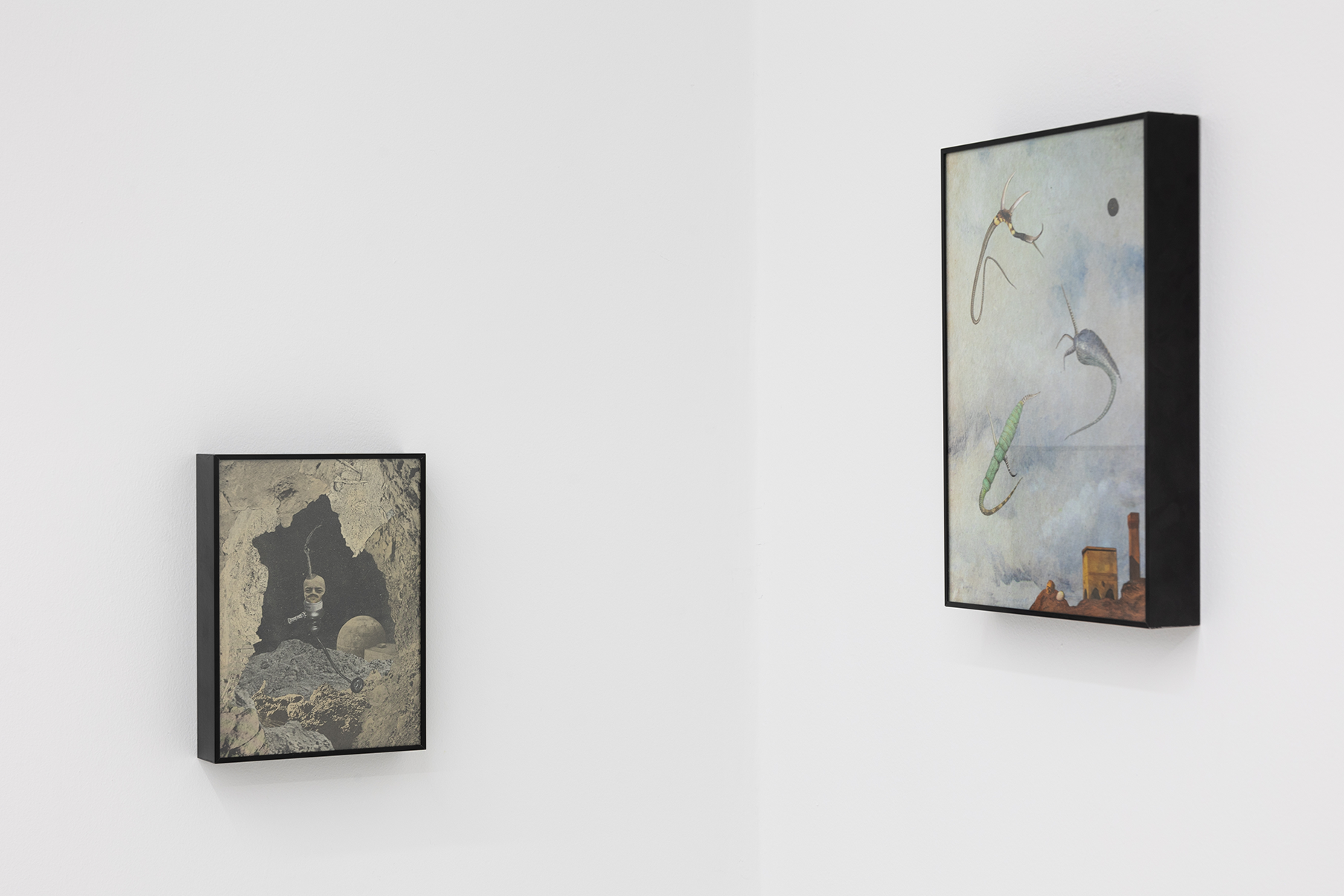
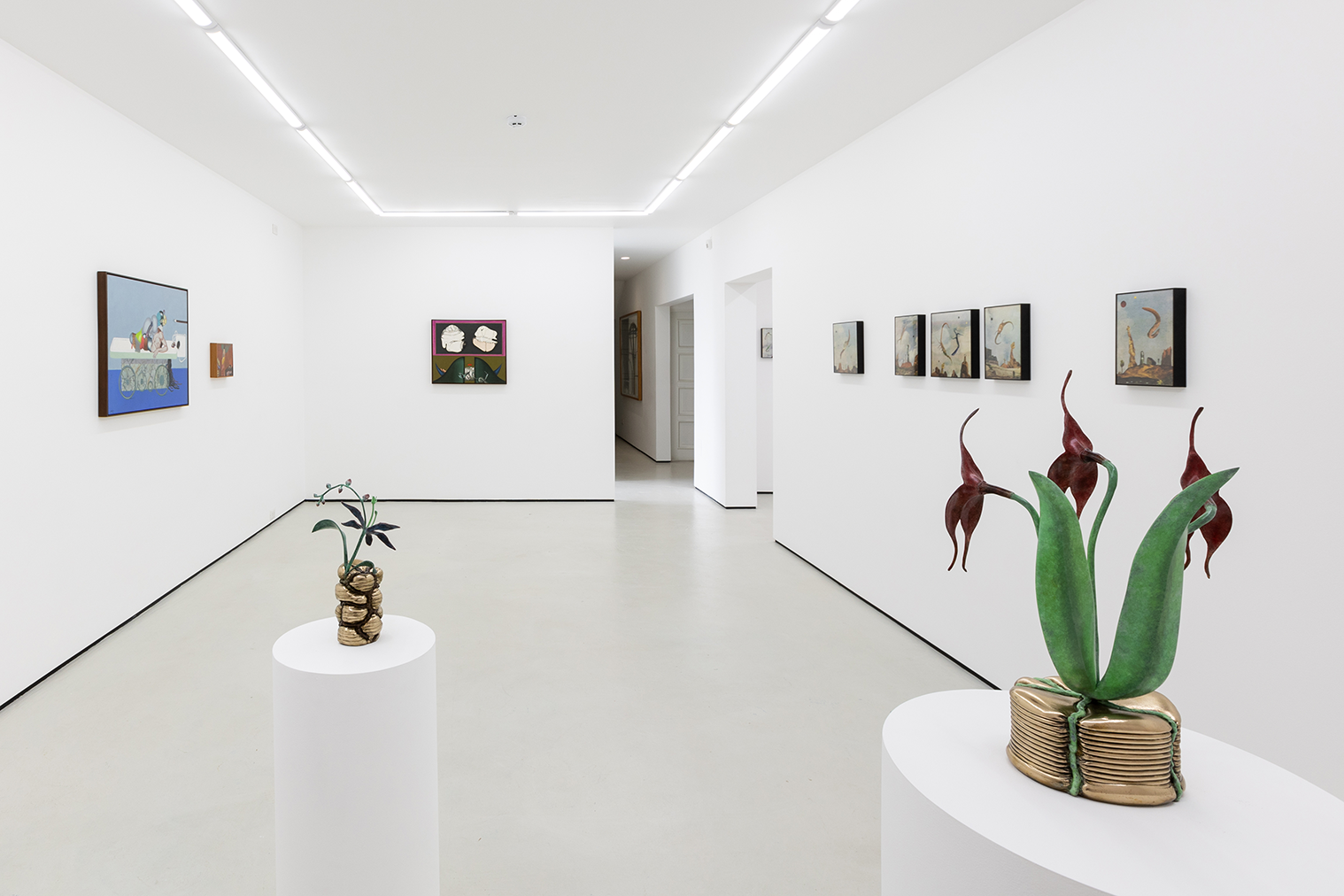
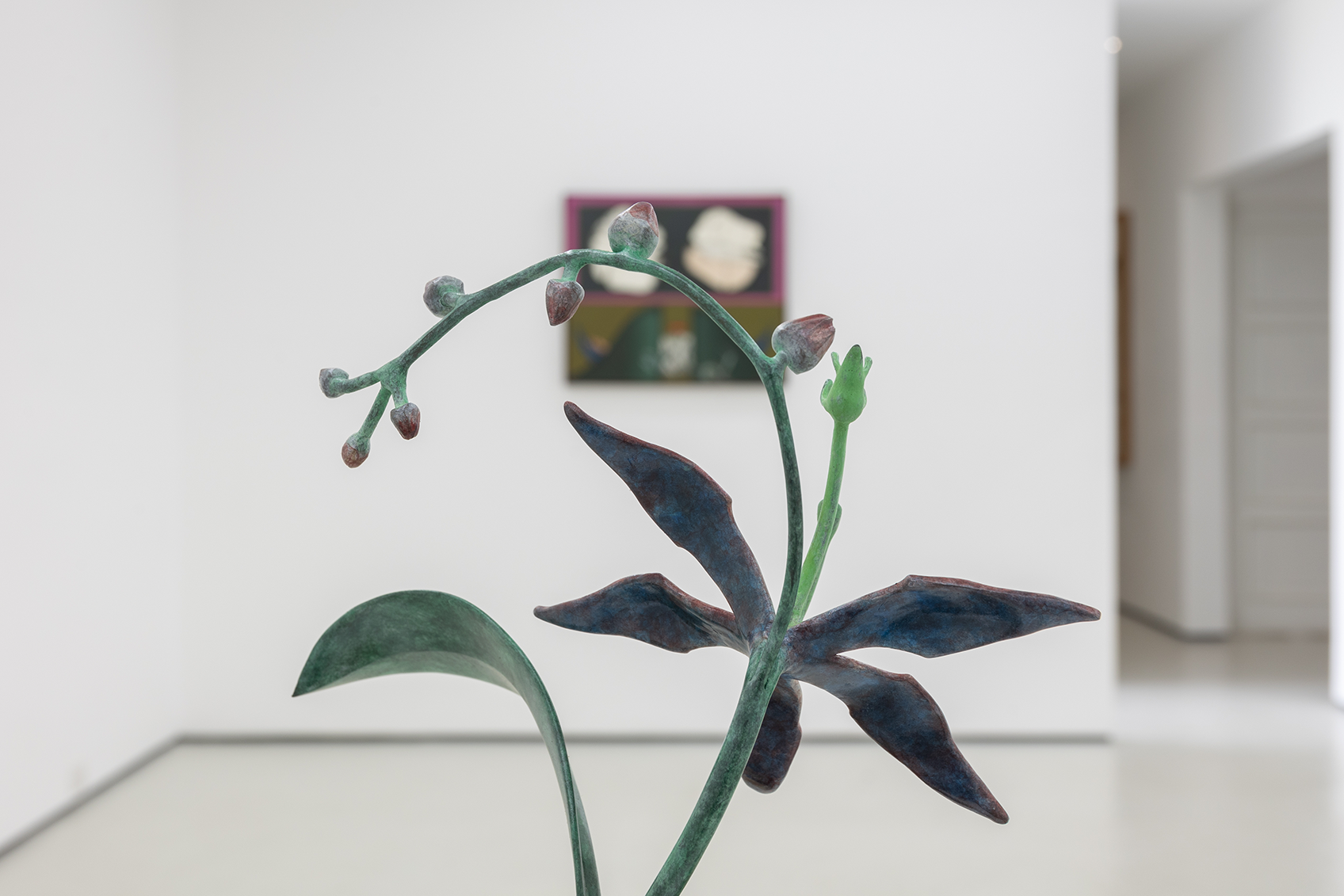
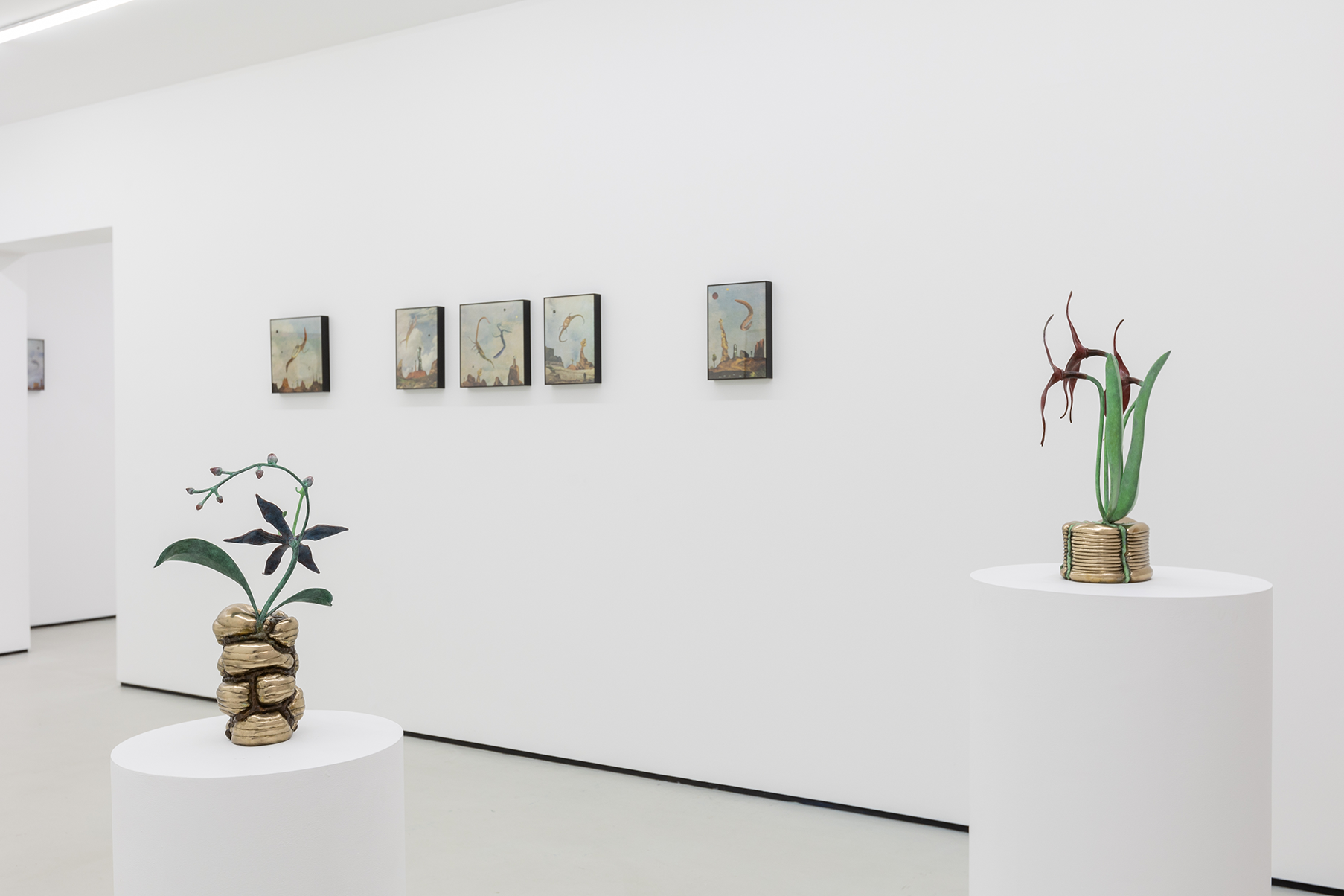
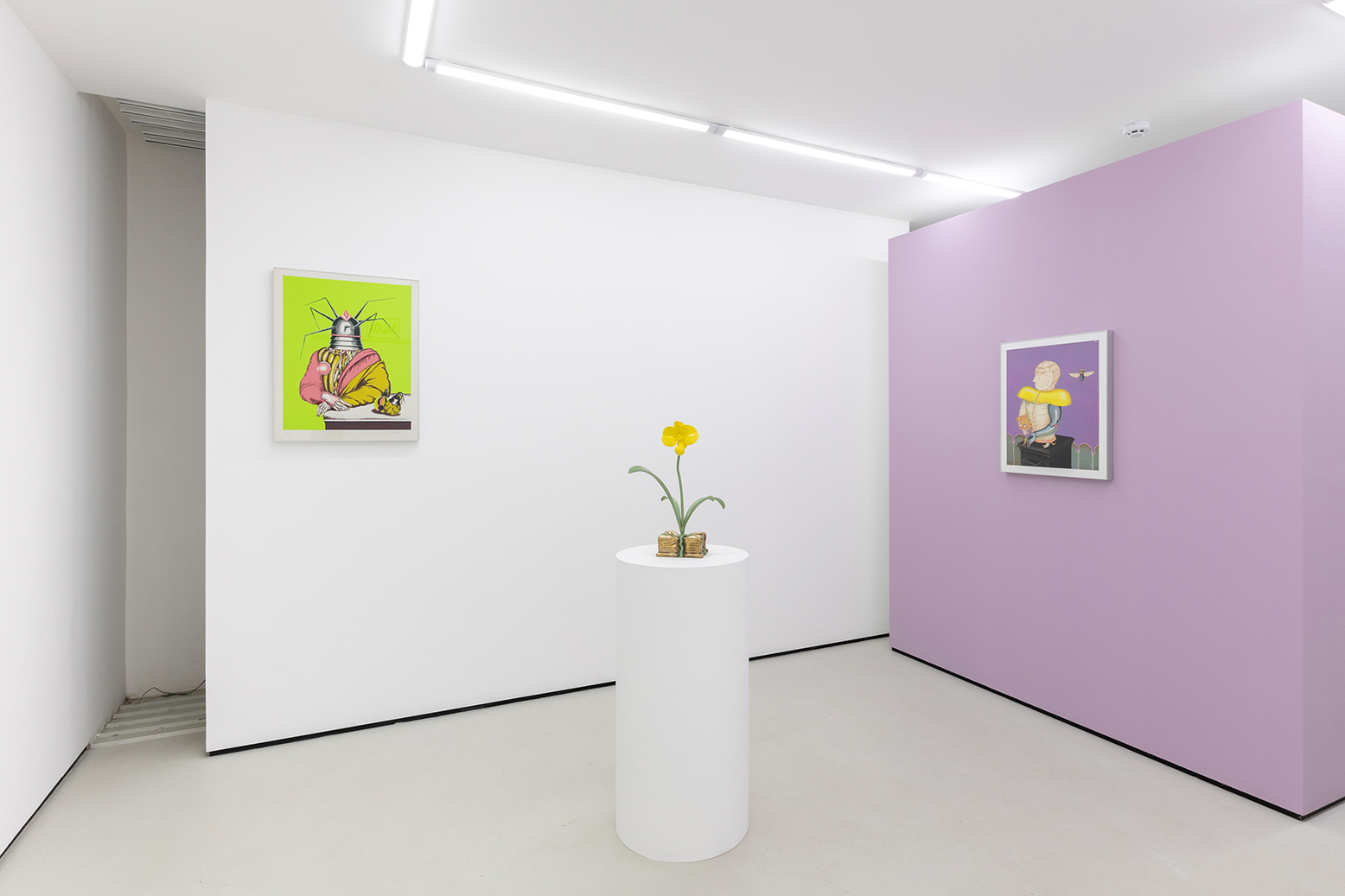
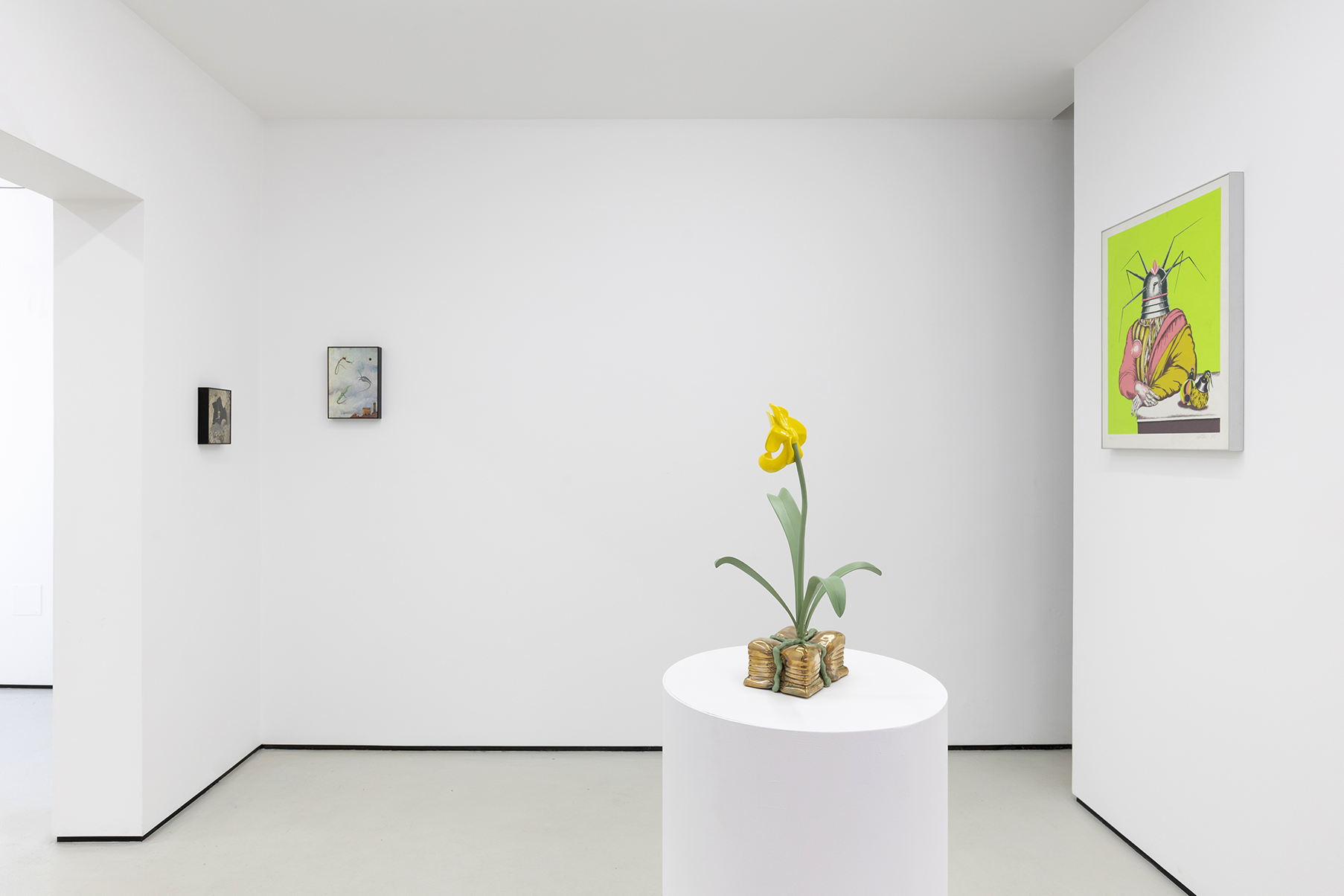
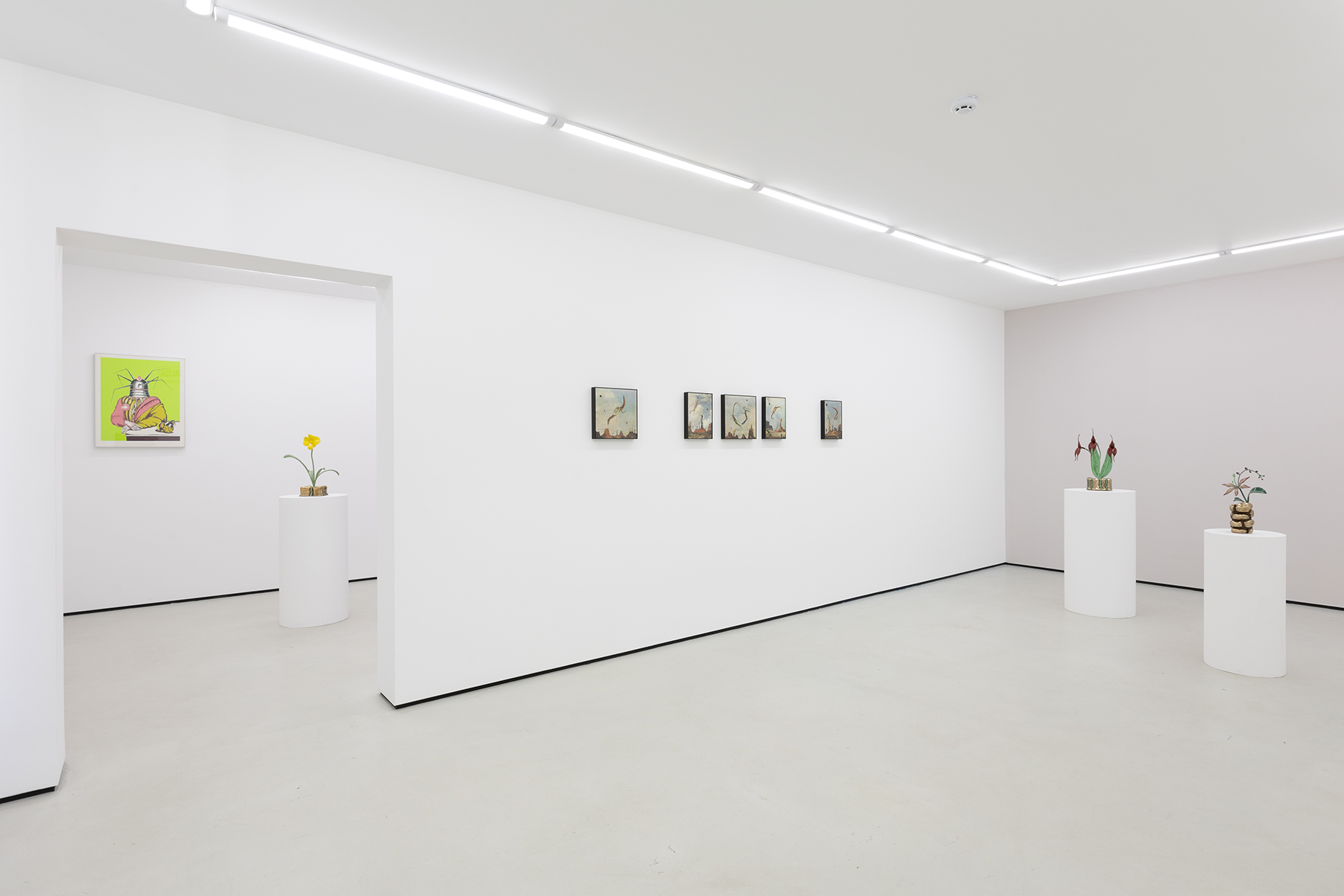
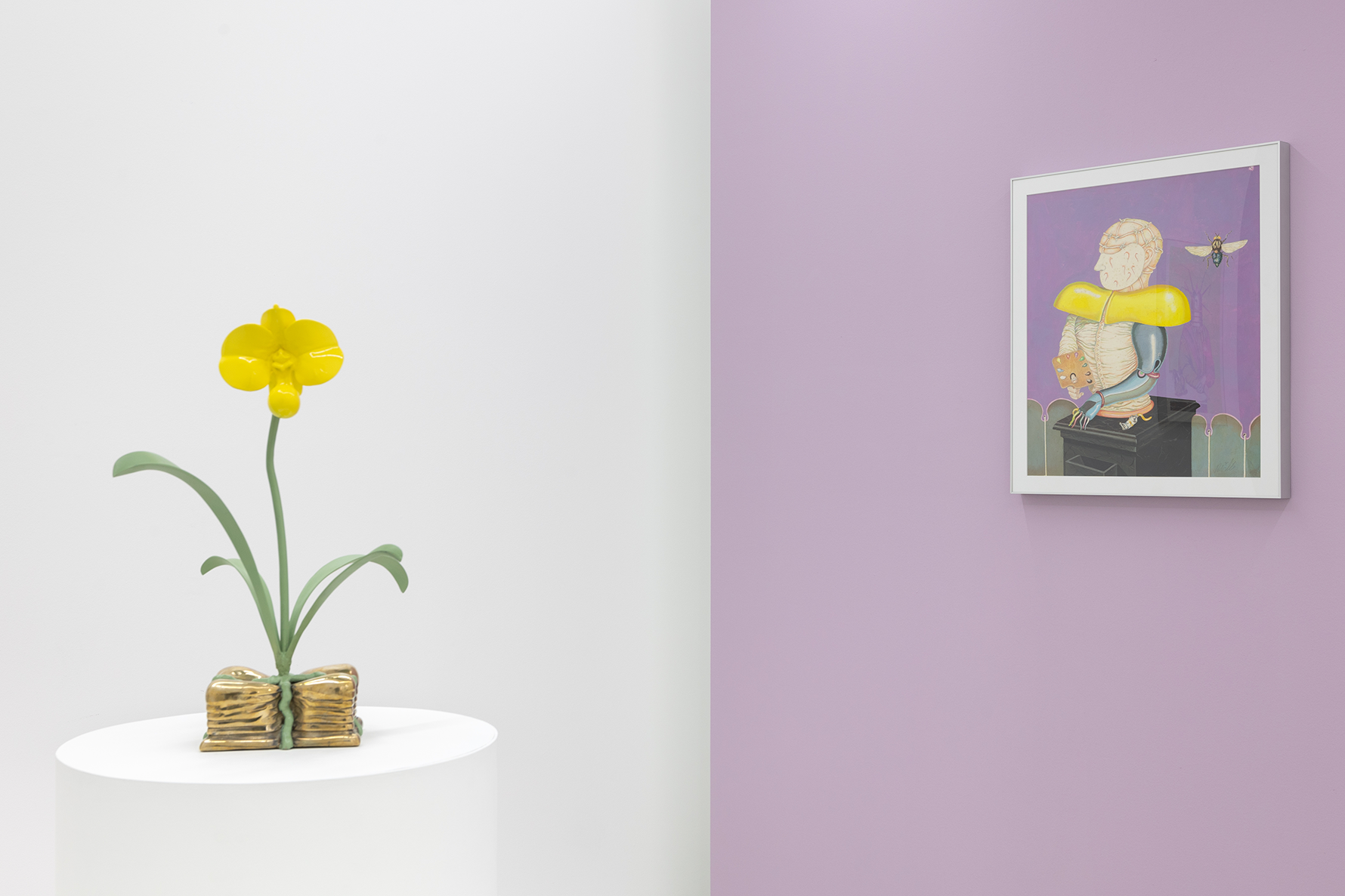
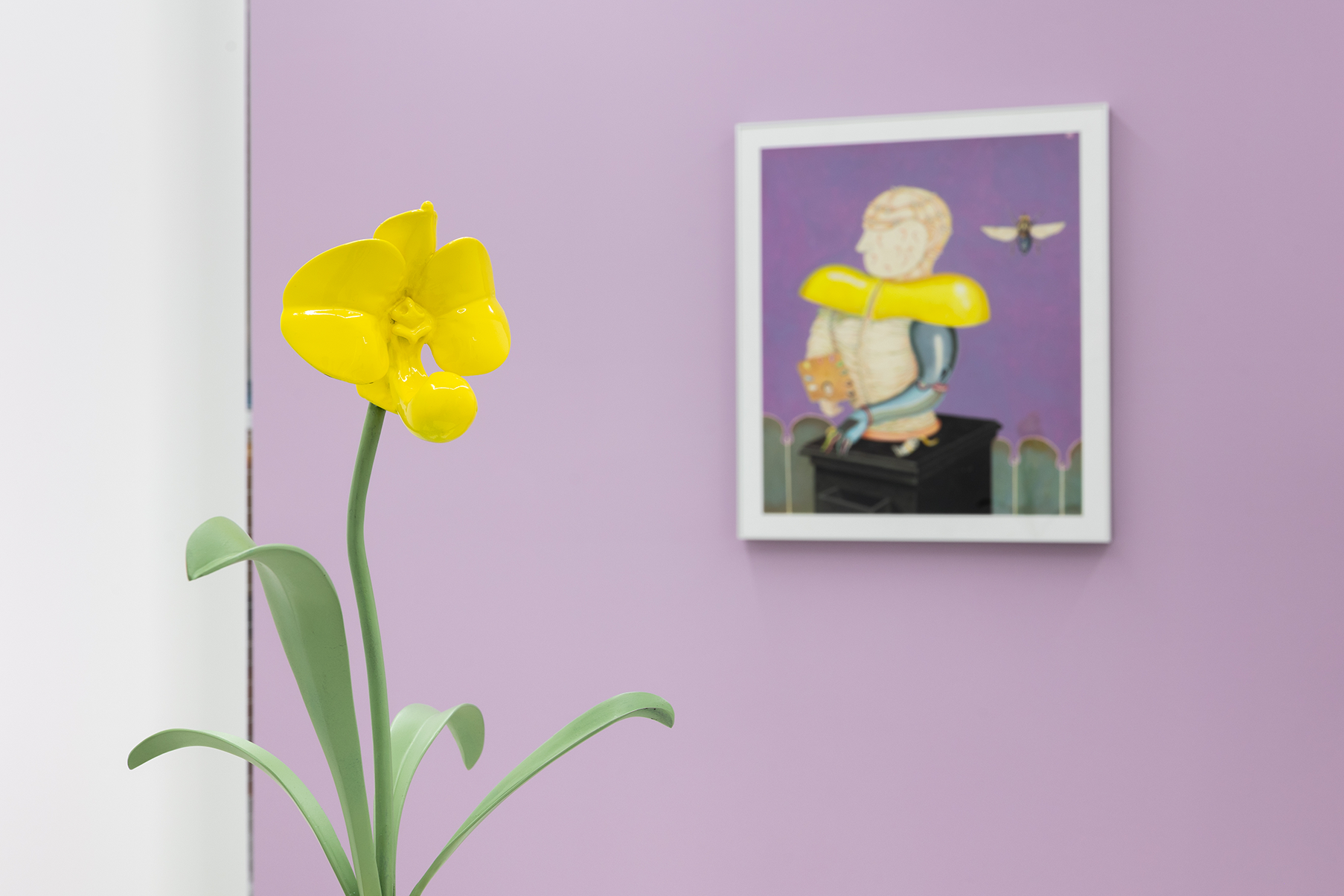
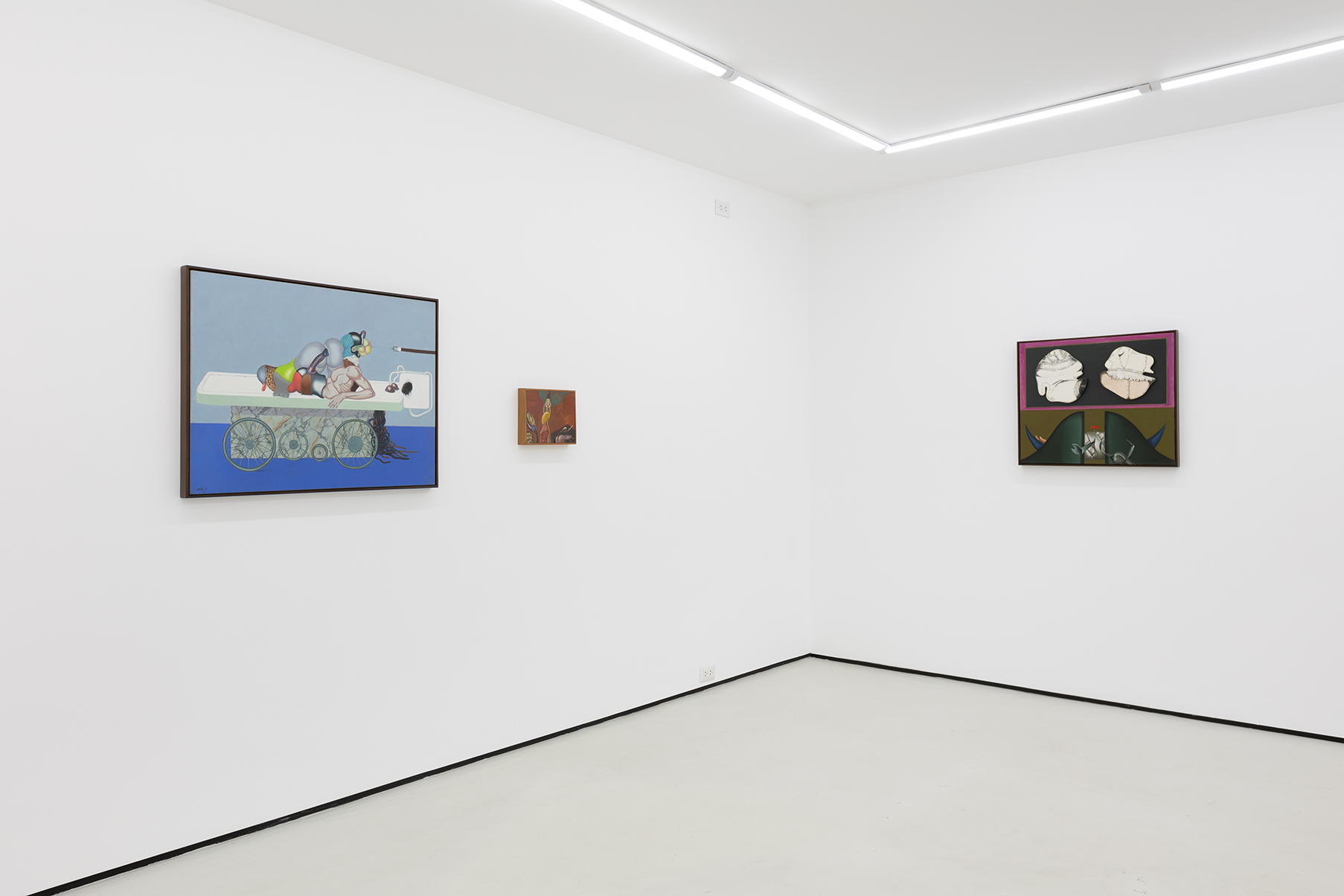
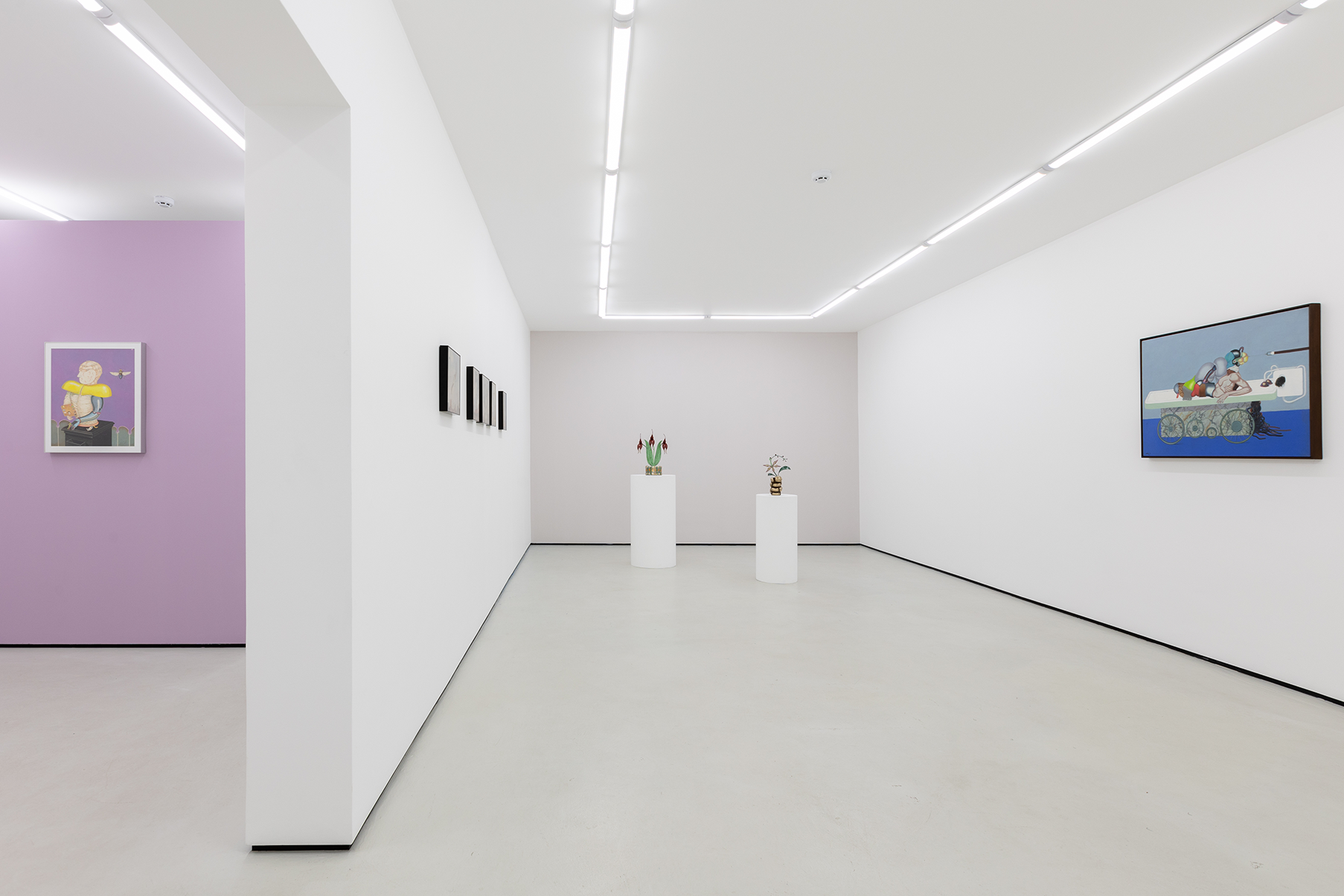
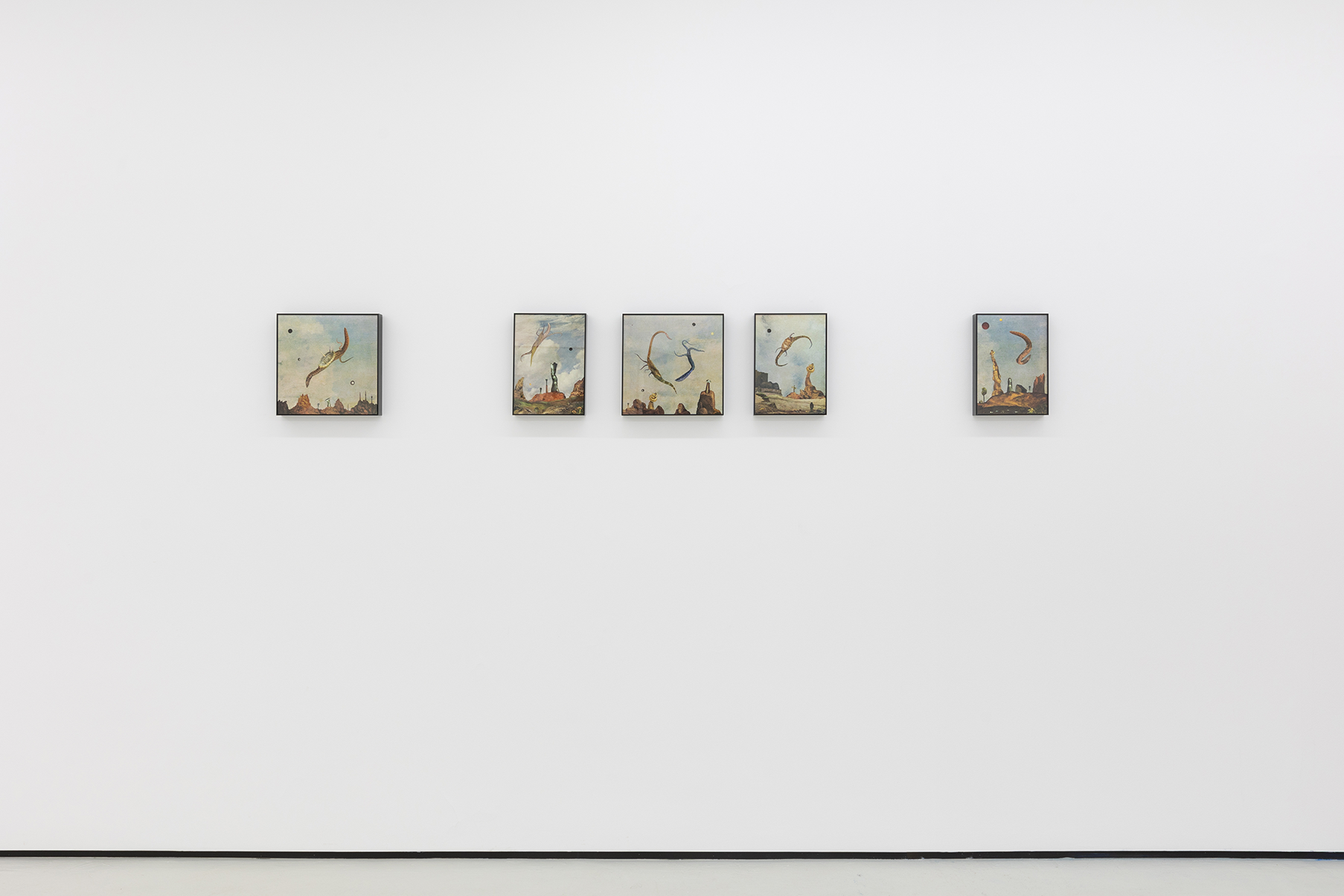
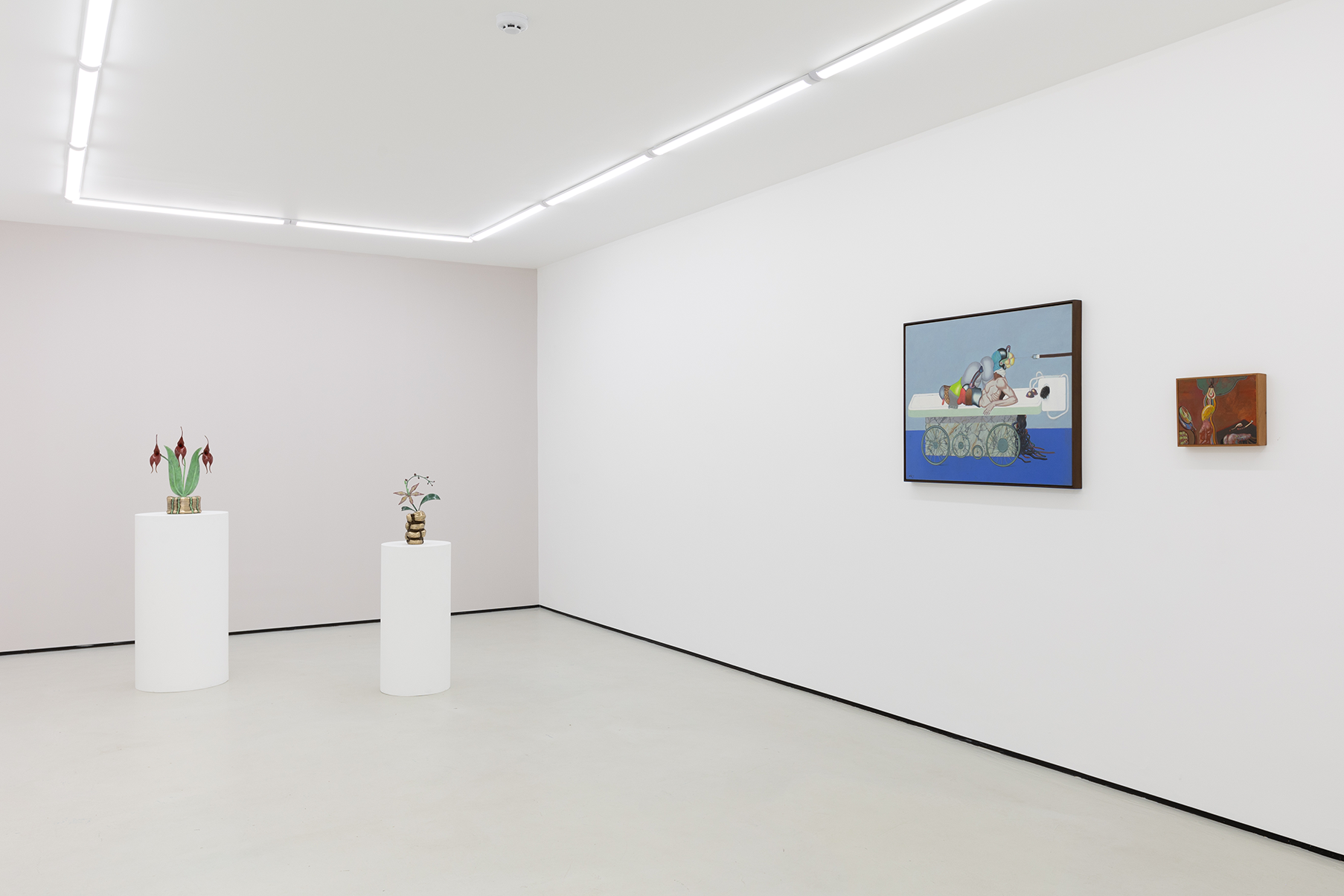
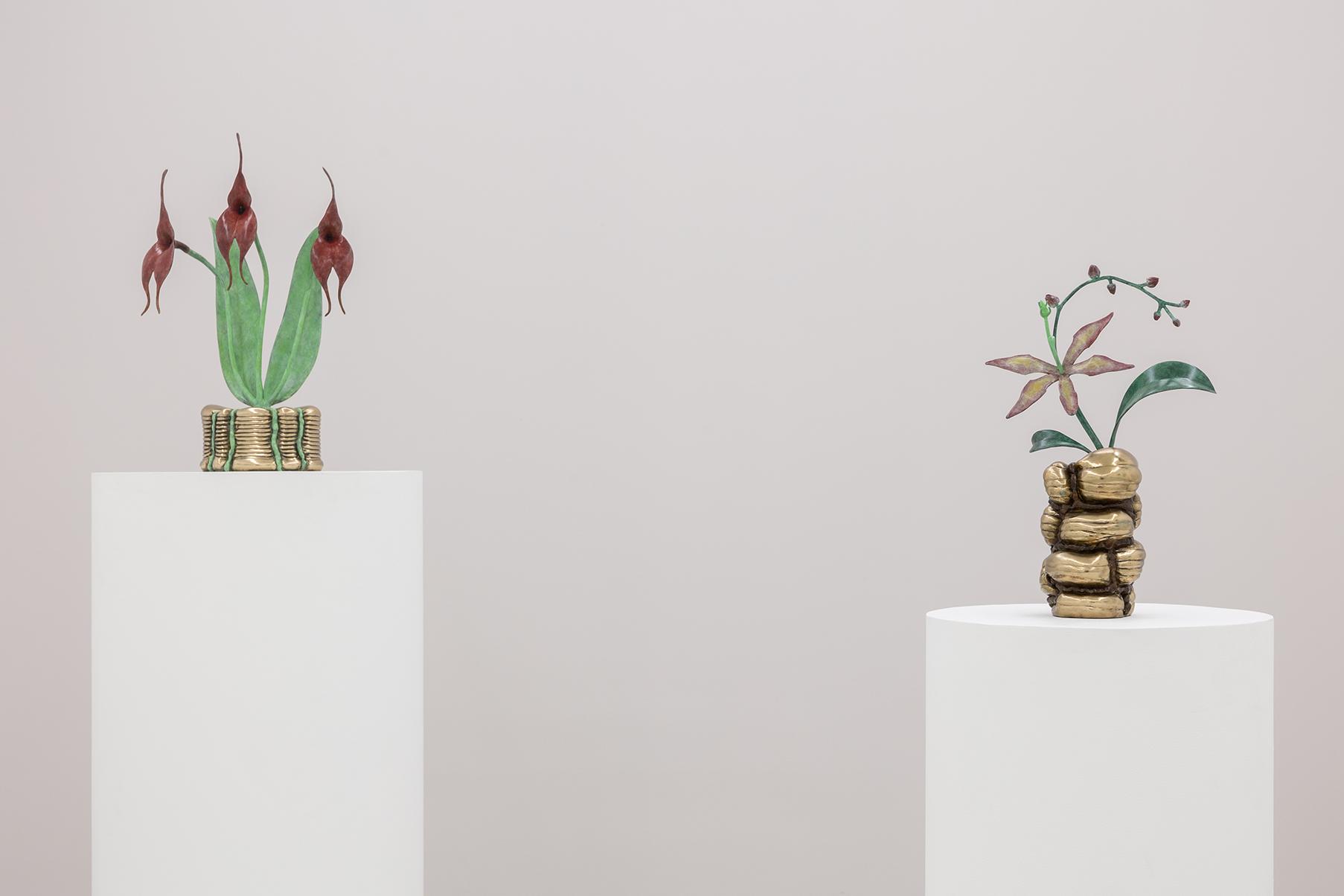
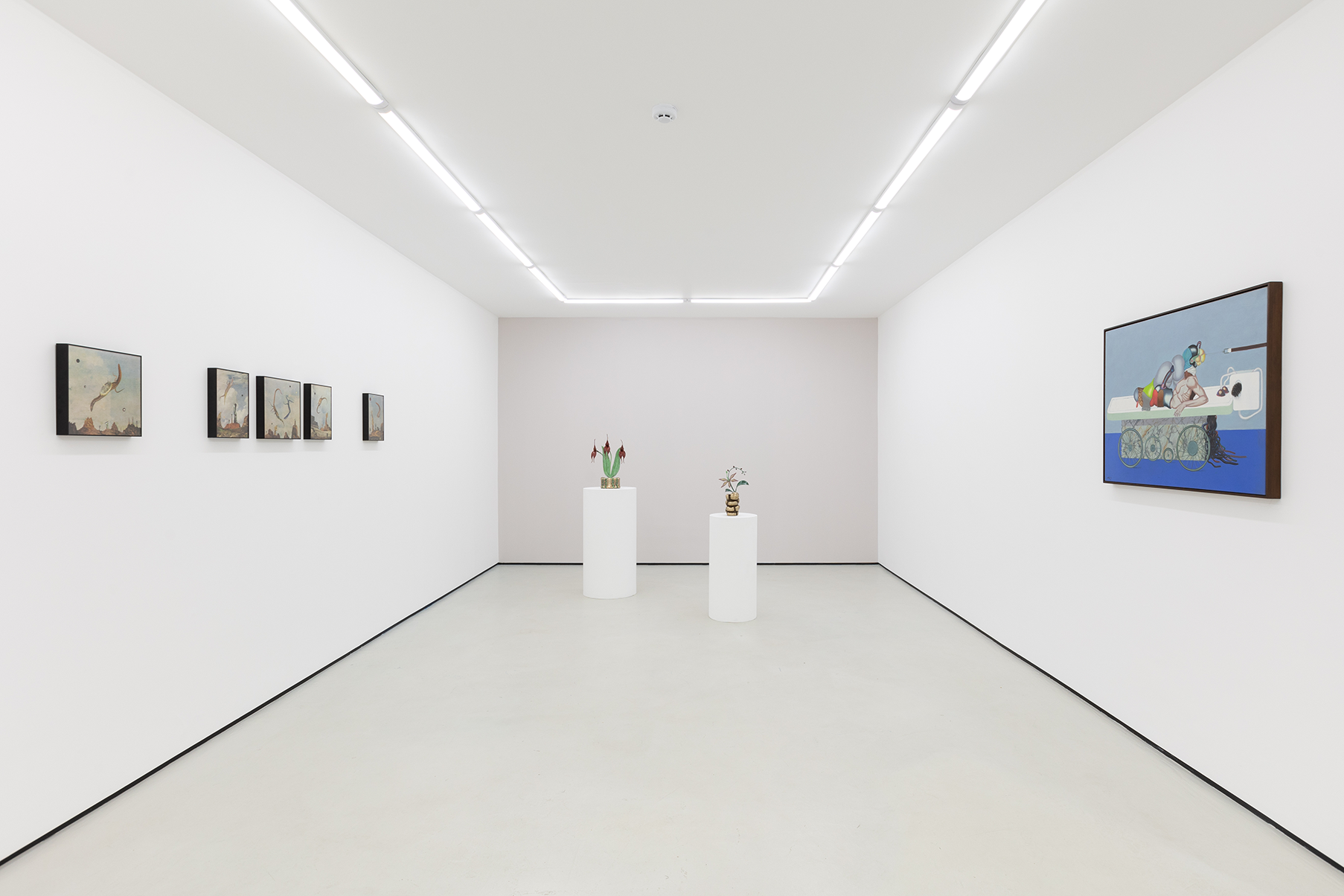
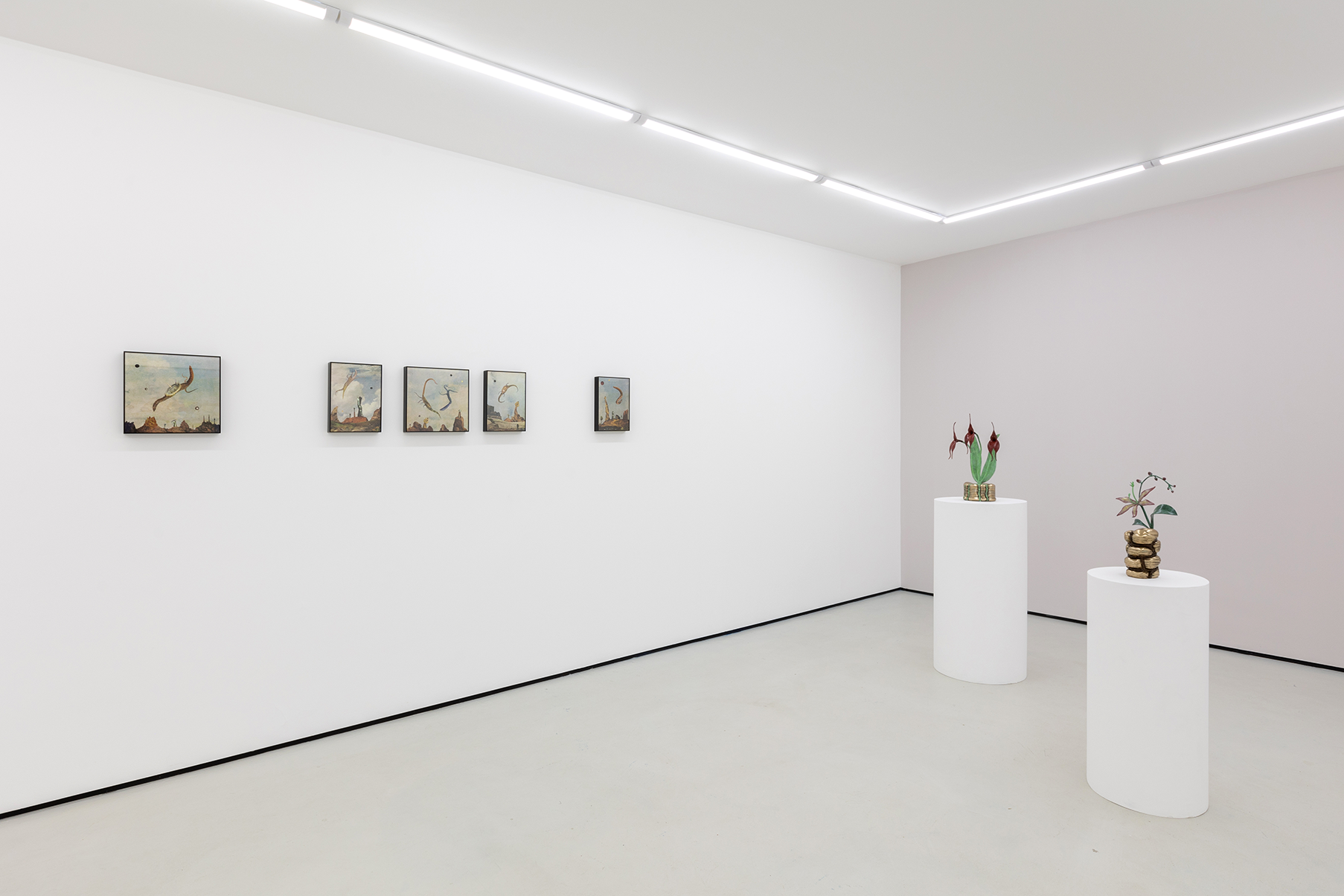
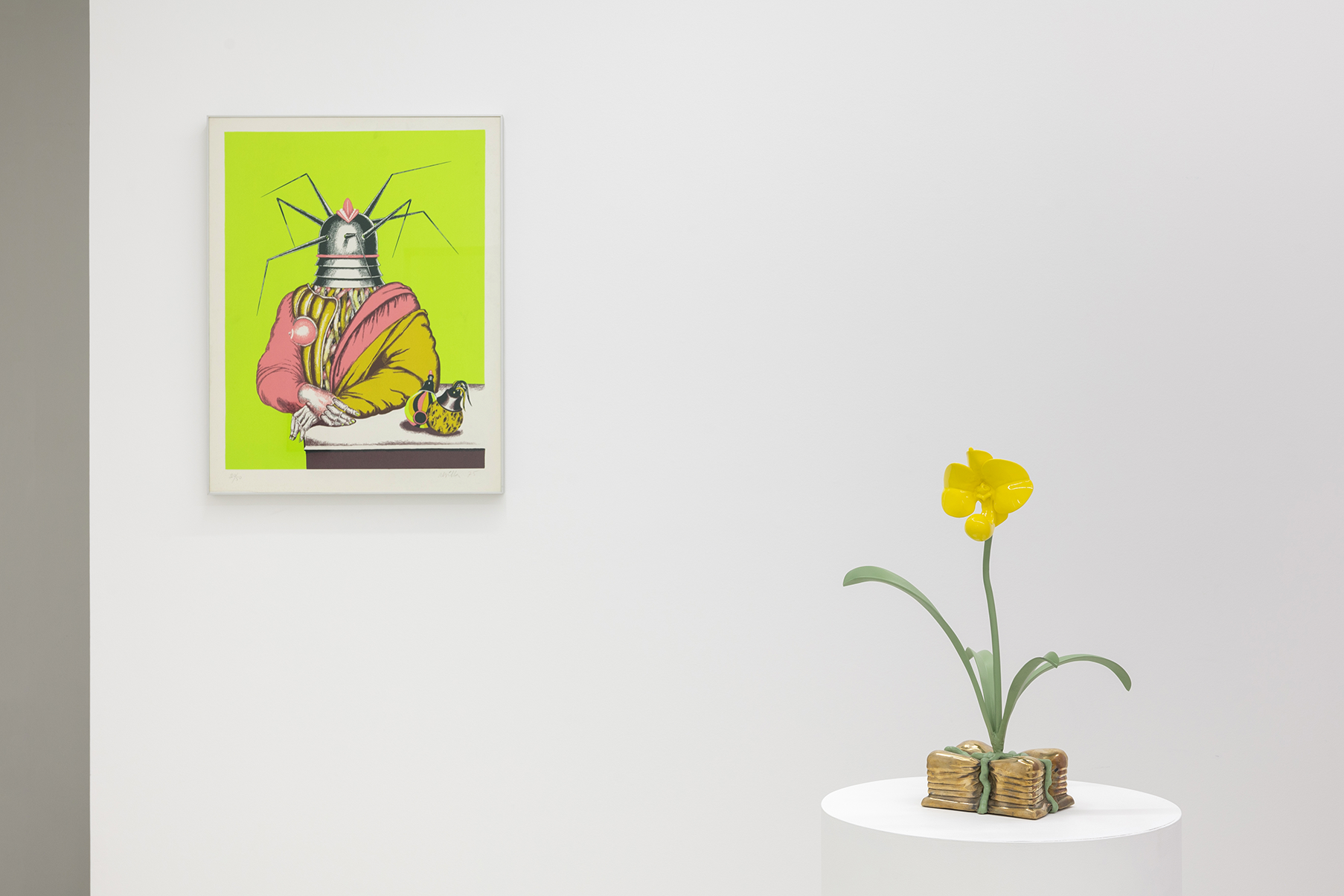
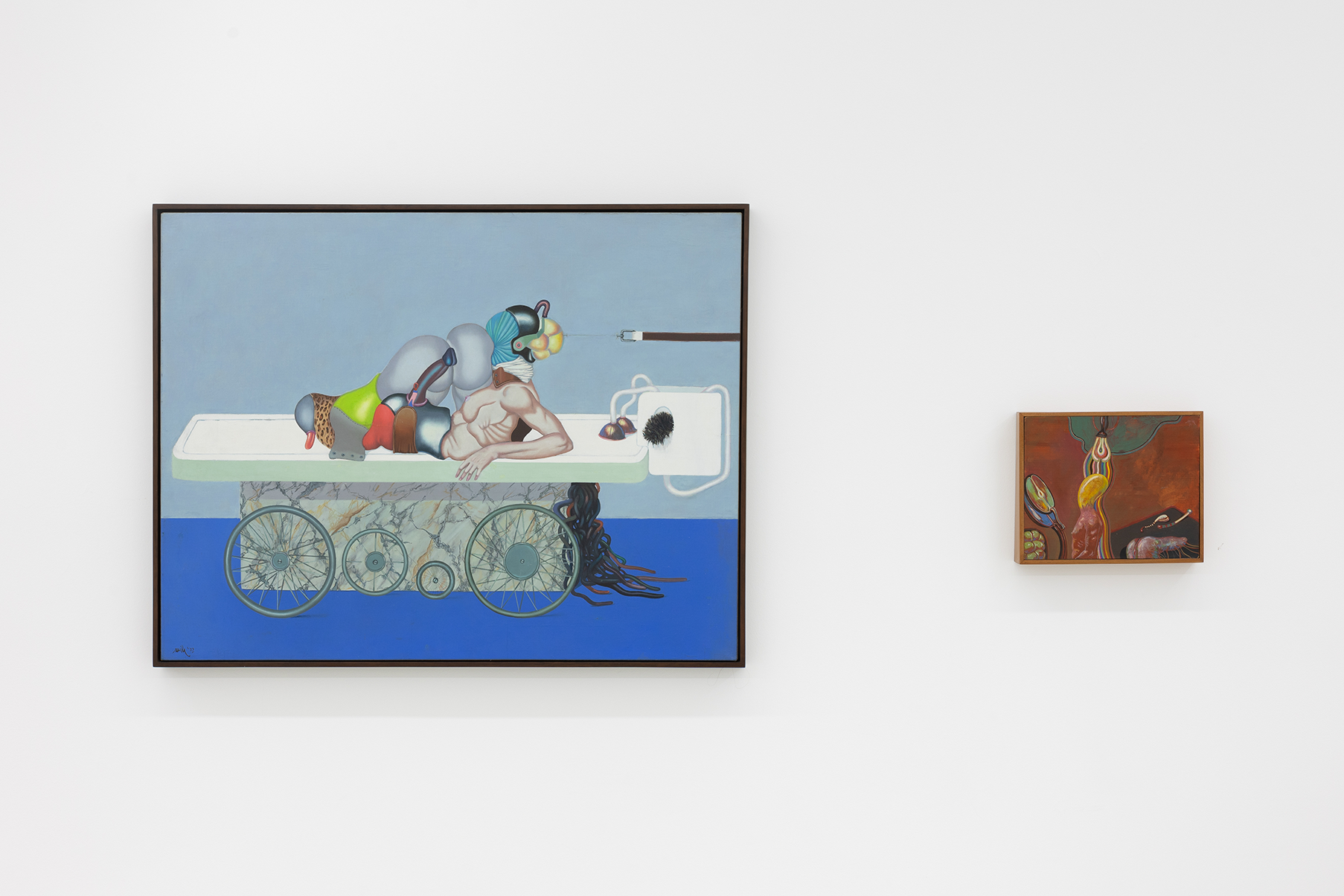
When I think about this space—inhabited by remnants of machines, bodies that rethink human anatomy, beings born from catastrophe, and vegetation that invents new forms of survival and autonomy—I understand that a metaphysical force operates here, one that disrupts and rewrites known laws. Within this territory, the artists, each from their own logic, seem to respond to a collective and social incongruity that pushes us toward a trance of dehumanization and uprootedness. This regressive progress—or false progress—that benefits a few at the expense of all, provokes a reaction that manifests in a dreamlike (yet feverish) atmosphere. In the face of loss, a hybrid ground emerges where body and object—understanding body as human, animal, or vegetal—overlap, merge, and reorganize in order to imagine new forms of existence. In Carlos Revilla’s work, we enter a laboratory where body and machine coexist on the same plane of intensity. His figures compose a territory in which sensuality filters into structures that, at first glance, might appear rigid, ironic, or even hostile. Formed within the climate of postwar European Surrealism, Revilla developed an acidic, skeptical, and erotically charged language to confront the technological promises of his time: a world that celebrated progress while generating new devices of control, dehumanization, and uncertainty. In his paintings, mobile limbs, prostheses, and machines not only evoke the Surrealist tradition of assemblage and the automaton, but also point to the ways in which modernity produces fragmented bodies and surveilled desires. With Héctor Delgado, we enter a post-collapse territory where the world seems to rebuild itself from its own debris. His collages are populated by mutant creatures inhabiting an almost infertile, desert-like, and dystopian terrain—yet one capable of generating its own systems. Far from proposing anarchical chaos, each work establishes a micro-ecosystem governed by internal logics, where the impure, the non-human, and the marginal become active agents of recomposition. James Jessiman, by contrast, works from research and travel. His bronze sculptures—batteries and orchids linked within the same circuit—are the result of mythologies gathered during his journey through Peru. Where the pursuit of power implies displacement and extraction, alternatives are imagined: machines that seem to activate through affective forces; engines fueled by desire; devices and transmitters that capture emotional signals. In his pieces, Jessiman dissolves the distinction between tool and organism to open the way for artifacts that reformulate the relationship between matter, body, and feeling. When I think about this space, I understand that the journey progresses from collapse to mutation: first, the clash of exhausted systems; then, recomposition made of remnants, signals, and improbable sprouts; and finally, the emergence of new hybrid entities. In this room, what surfaces is not a nostalgia for what was lost, but a radical affirmation: the future belongs to the unstable, the impure, the playful, and the improbable—to all that, even in the midst of collapse, insists on living. Tarissa Revilla
Receive more information on available works from this exhibition.
WORKS
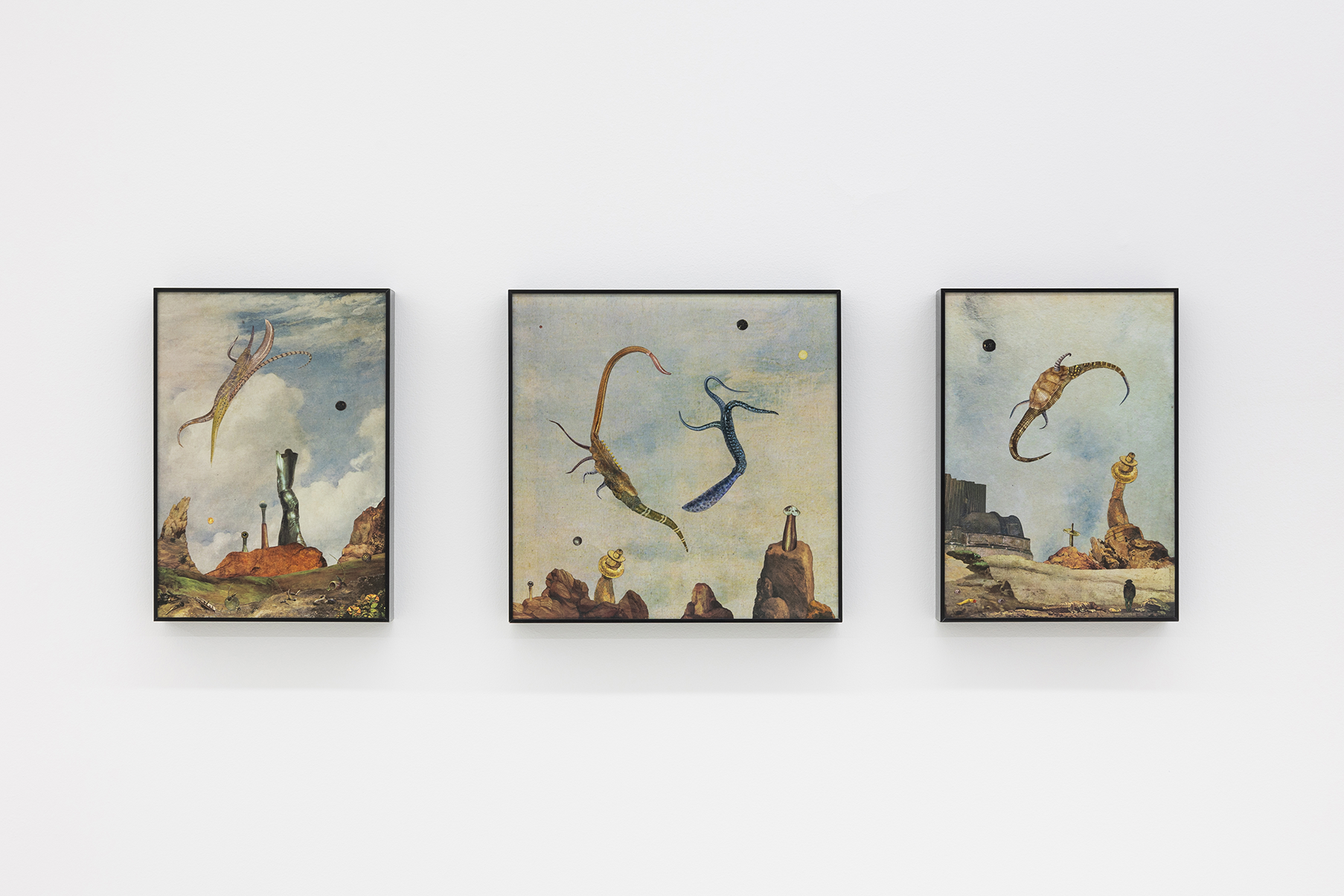
Syameaz, Danza Ondulante & El Cangrejo
2026 Collage on paper, giclée print (Photo Rag Satin 310 gsm) 29,7 x 21 cm 29.7 x 29.7 cm 29.7 x 21 cm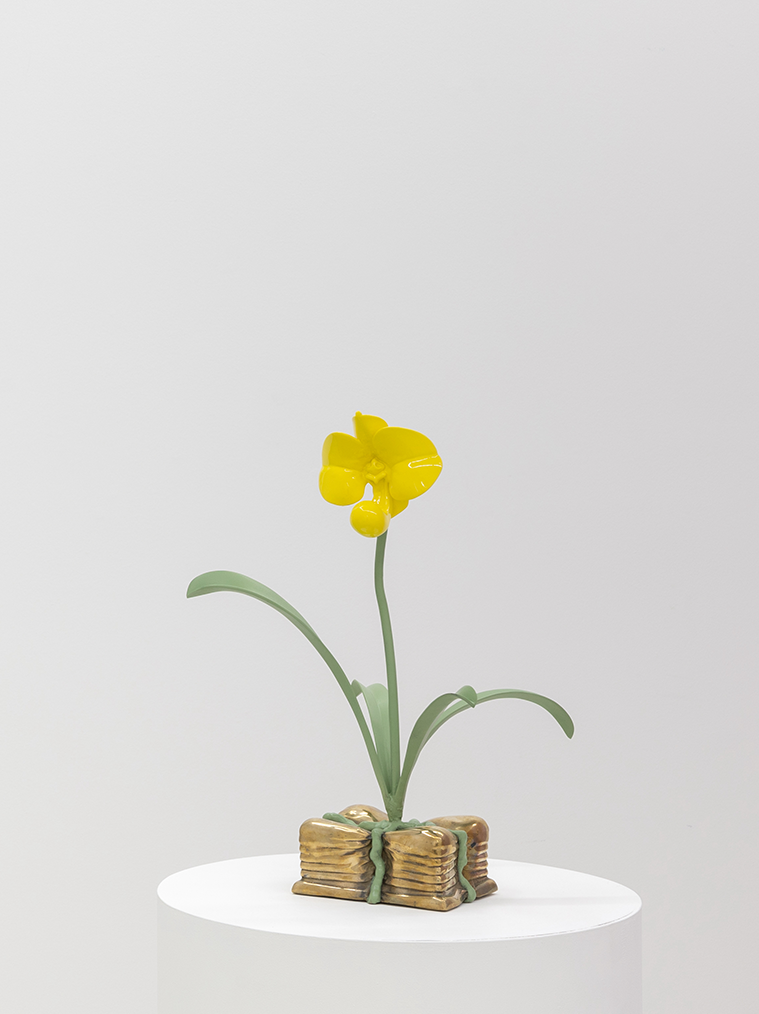
Salomon's mistake
2026 Bronze, Patina, Polyutherane Paint 45.5 x 33 x 24 cm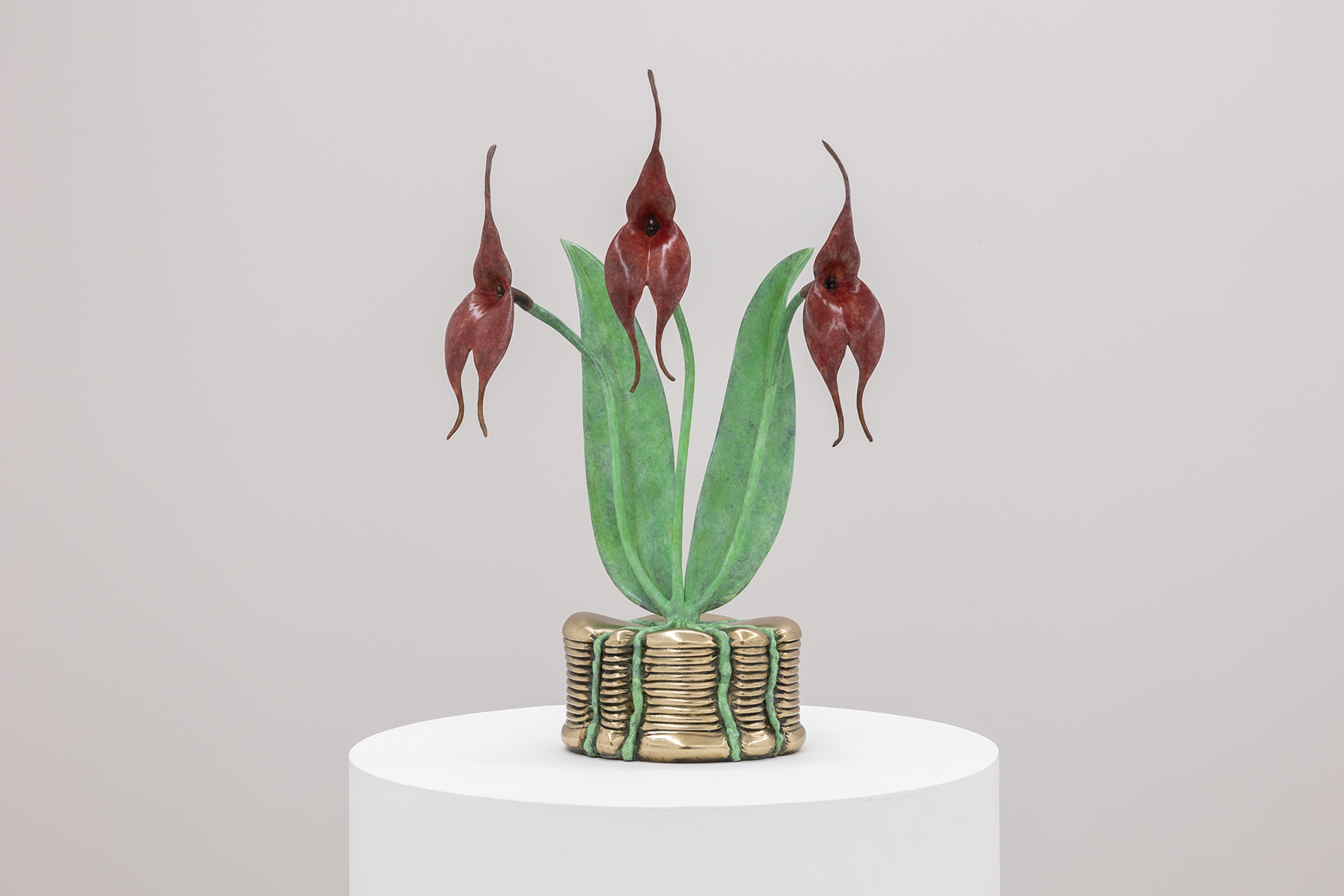
Salome buys her own flowers
2026 Bronze, Patina, Polyutherane Paint 57 x 30 x 13 cm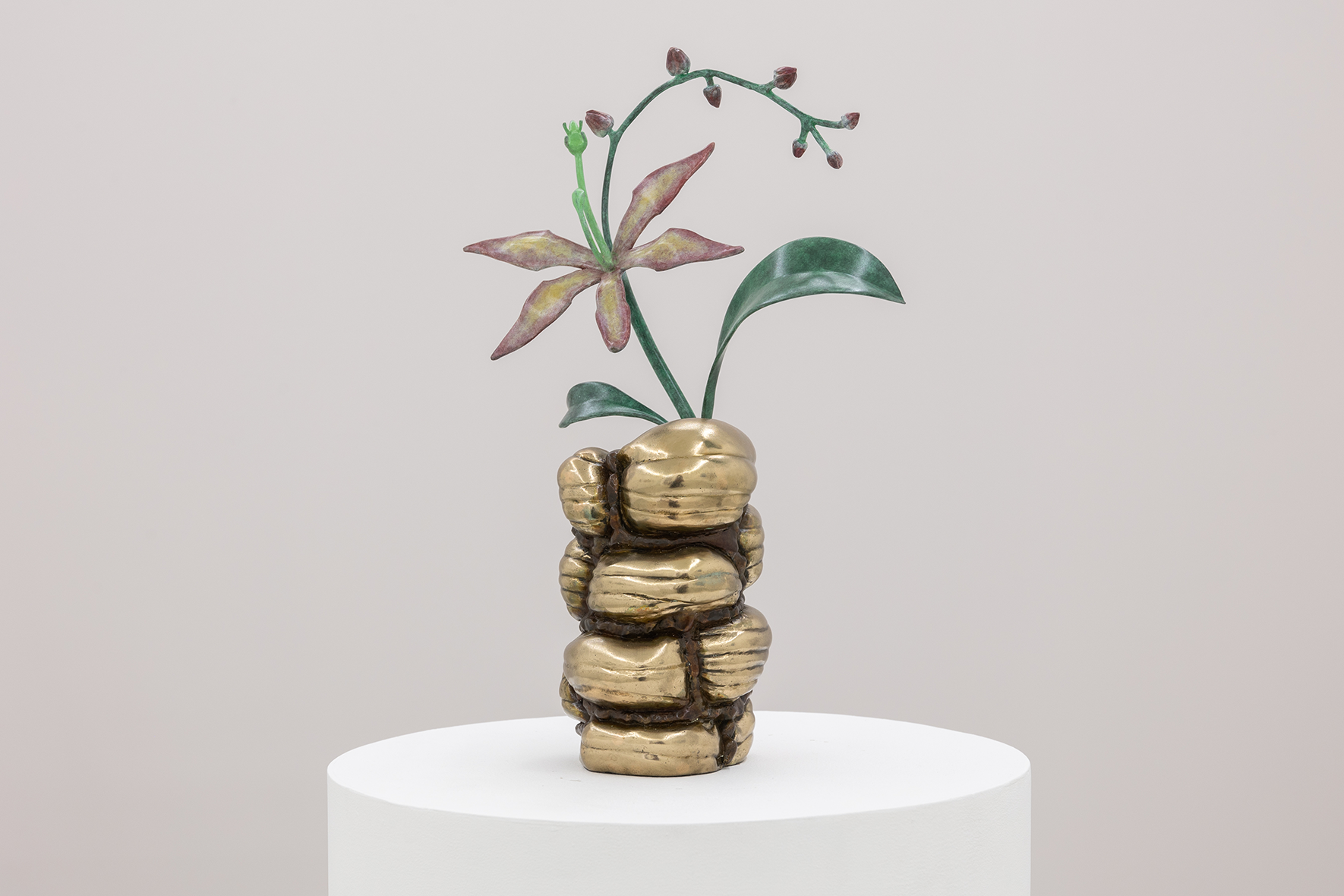
TO21
2026 Bronze, Patina, Polyutherane Paint 37 x 26 x 9 cm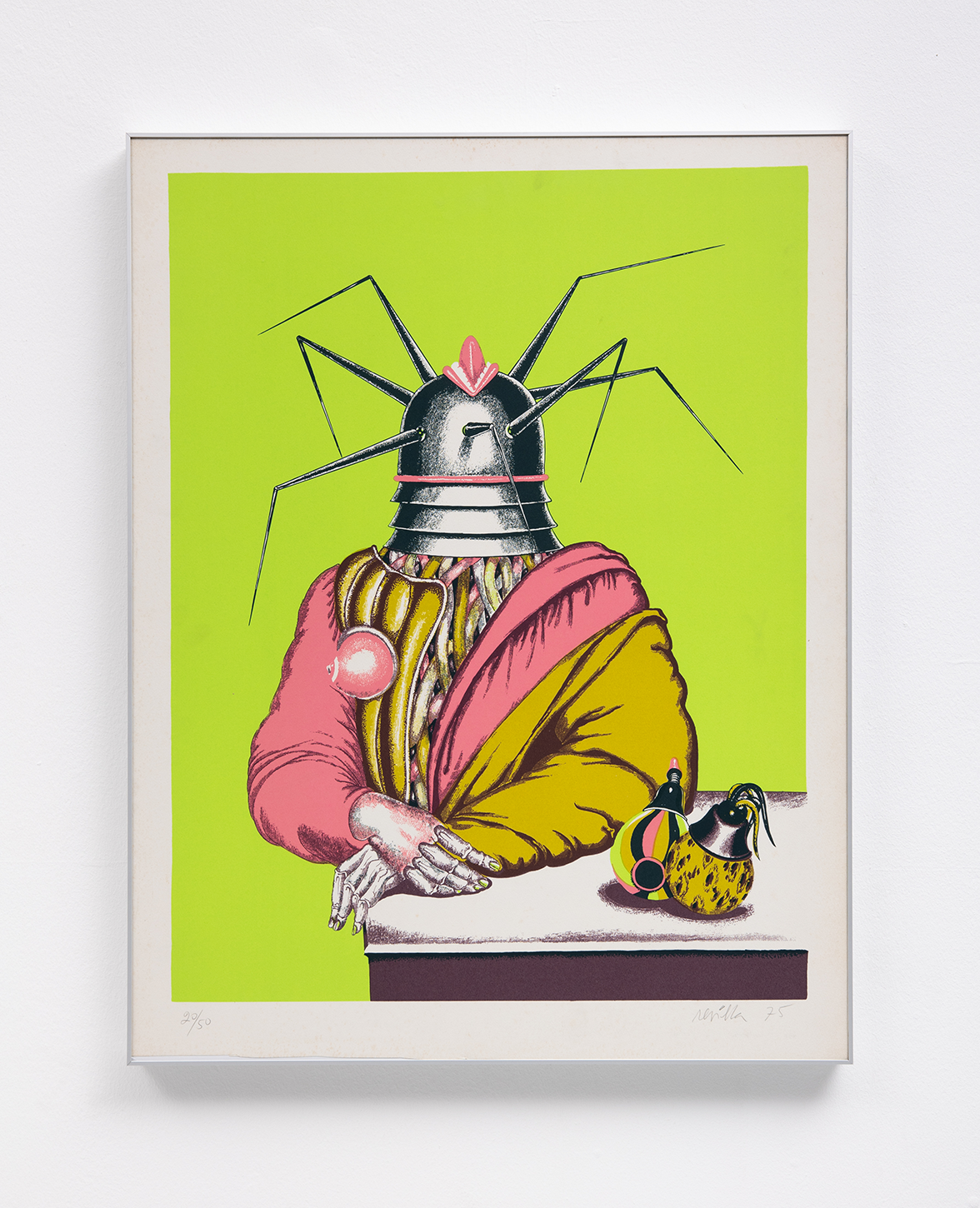
S/T
1975 Screenprint 73 x 56.5 cm.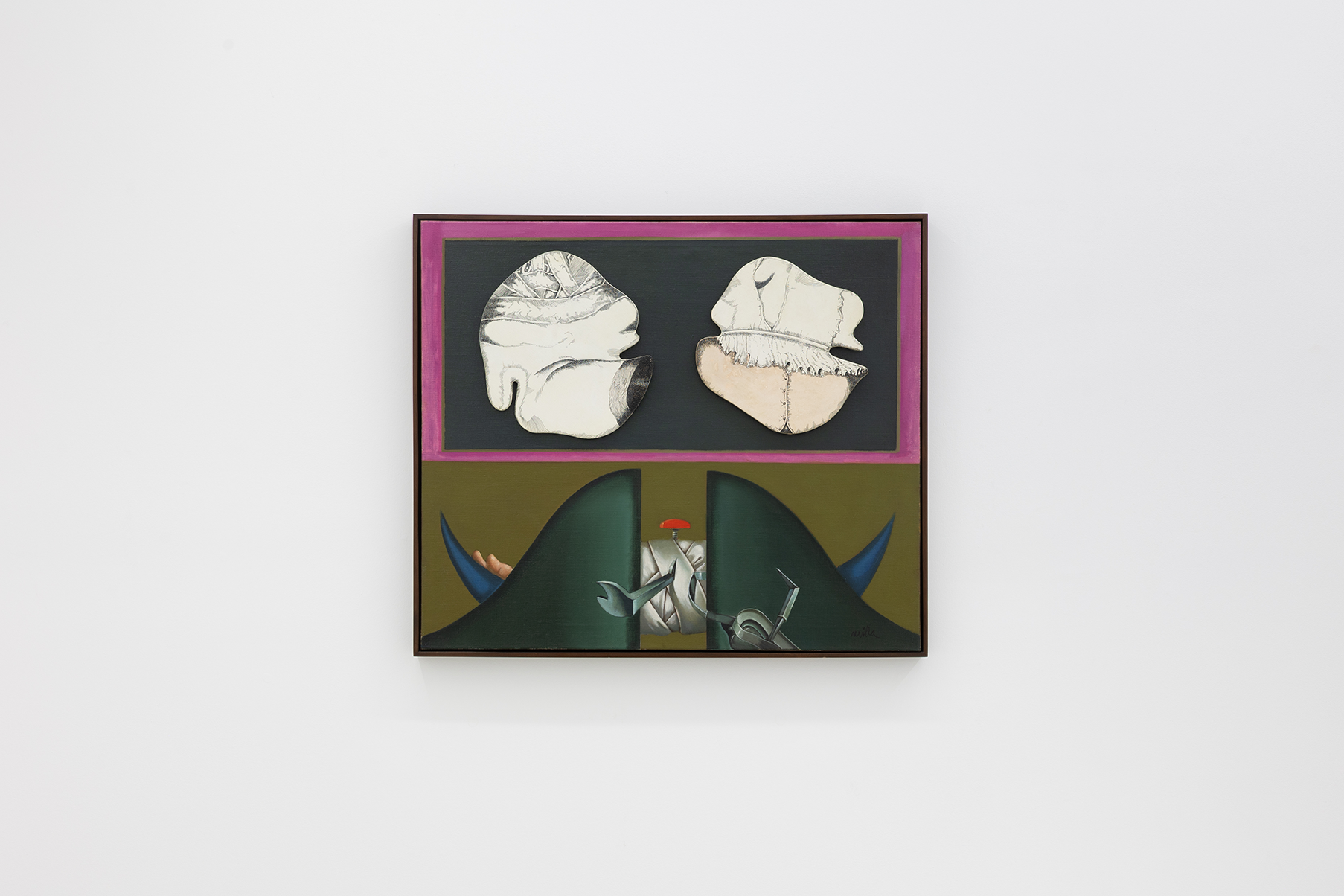
Poét-Poét
1969 Mixed media on canvas 62 x 72 cm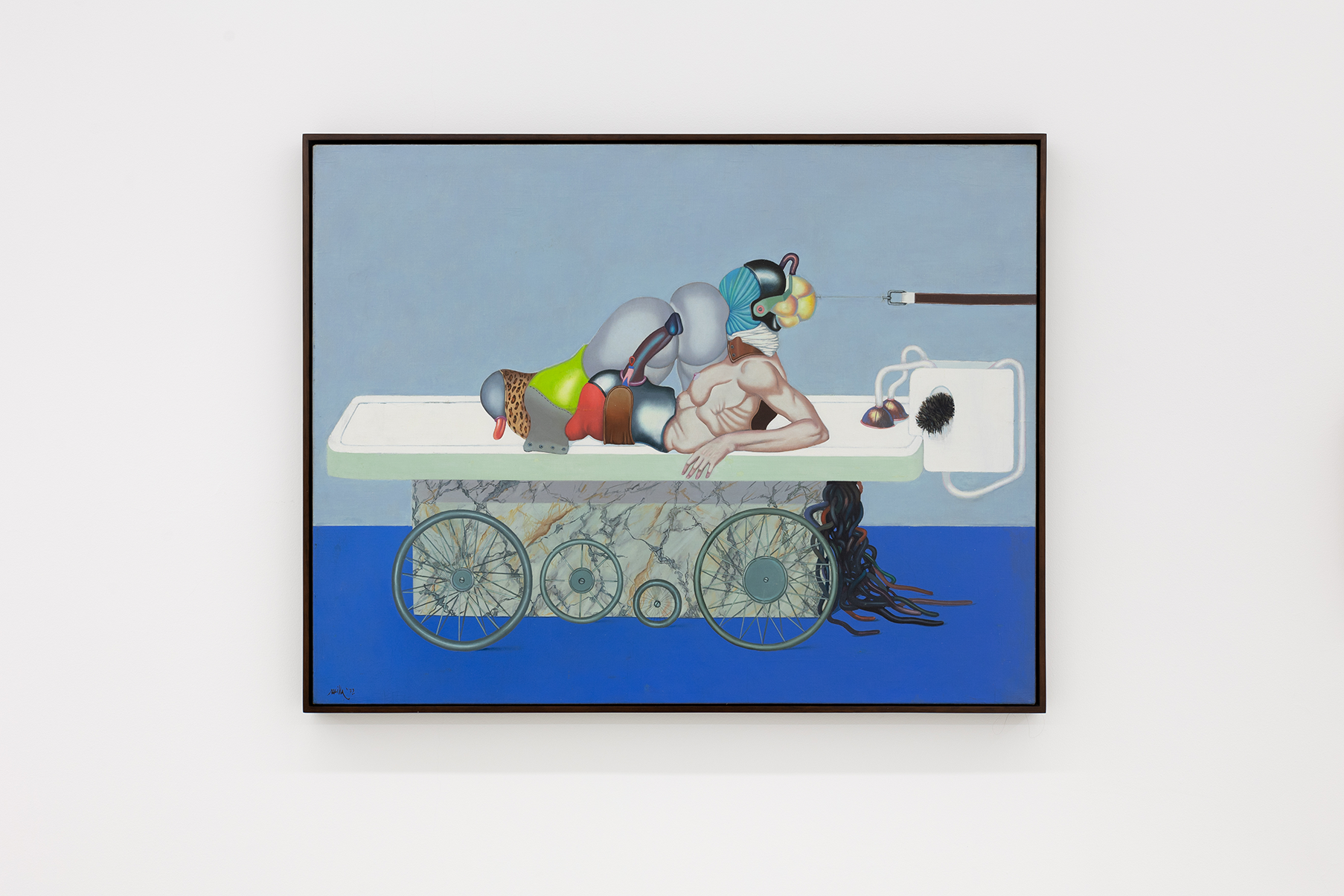
Claire de Lune
1972 Oil on canvas 68.5 x 89 cm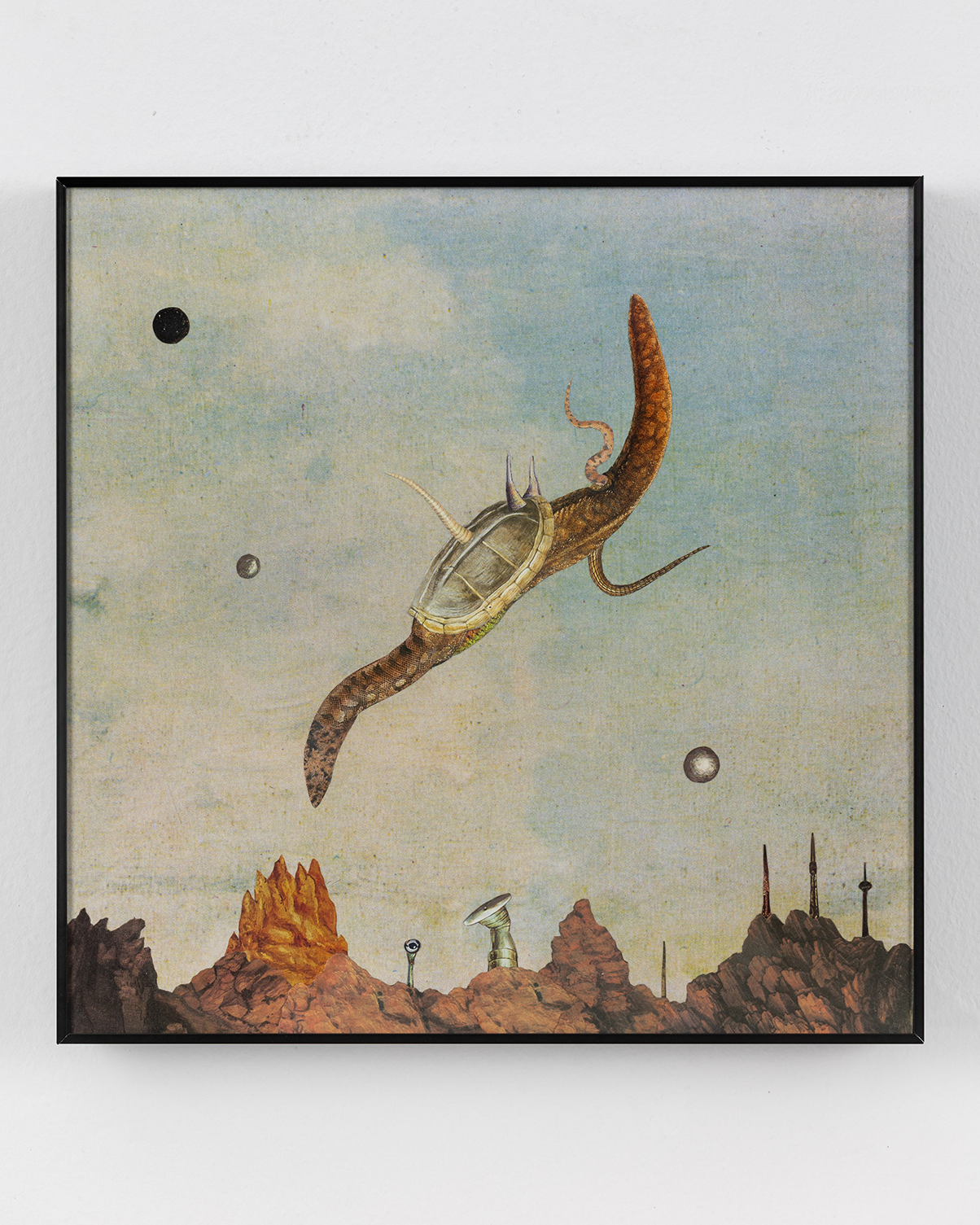
Comunicaciones ígneas
2026 Collage on paper, giclée print (Photo Rag Satin 310 gsm) 29.7 x 29.7 cm
ARTISTS
James Jessiman
British sculptor, educator, writer and editor based in London, known for merging natural motifs with science fiction aesthetics and antiquarian references. His work explores desire, transmission, and the relationships between humans and objects. He grew up in Scarborough within a family of antique dealers, which sparked an early interest in objects, scarcity, and collecting. He studied at Leeds College of Art, obtained a BA in Illustration from Kingston University, and later completed an MA in Printmaking at the Royal College of Art. His practice focuses on sculptural works based on floral forms such as tulips and orchids, cast in painted bronze or polished metal to create “beacons” and portals of longing. Among his key influences are the Tulip Mania of the 1630s, Jean Baudrillard’s theories on collecting, and early twentieth-century Viennese cold-painted bronzes. His work is also informed by research-based travel, including tulip grasslands in Uzbekistan and a 2025 research visit to Lake Titicaca in Peru. Notable works include Terraformer (2023), a series of invented tulip species cast in bronze presented in Miami, and Gates of Desire (I) & (II) (2025), his first outdoor installation commissioned for Frieze Studios’ Modern Nature programme on Sloane Street, exploring the dynamic between transmitter and receiver in the pursuit of desire. Jessiman is also a patron and curator of 020 Desk Zero, a 24-hour poetry telephone line inspired by 1960s projects such as Dial-a-Poem. He additionally runs Desk Zero publishing, which will release titles including Running with Words by Steve Belowsky and Wrongness by Ruth Novaczek in 2026.
Héctor Delgado
Photographer graduated from Centro de la Imagen (2010), specialising in analogue photomontage and stop-motion animation through the use of magazine archives as primary material for the development of his artistic projects and research. In 2010, he initiated the editorial project Grumos (1. Part of a substance that coagulates. 2. A cluster of elements compressed together). He has presented artistic projects at Centro de la Imagen (2014), Espacio Fundación Telefónica (2015), Galería Fórum (2017), and Corriente No Ficción, the Latin American non-fiction film festival (2018). He self-published the book Eclipse de Sol (2018), which was a finalist at FELIFA (2018) and Tinta (2018). Alongside his artistic practice, Delgado has led workshops focused on artistic projects, publishing, and animation through photomontage techniques. He is currently in post-production of his first animated feature film, Los Hijos del Sol Negro.
Carlos Revilla
Carlos Revilla (France, 1940 – Lima, 2021) was the son of a Peruvian diplomat and a French mother. His father’s profession, along with his artistic training and career, led him to live in different countries, though he never lost his Peruvian roots. In Spain, he developed strong ties with the Surrealist group, drawing particular influence from Salvador Dalí’s vision of the movement, with whom he shared a close friendship. After André Breton’s passing, he was invited by Eduard Jaguer in Paris to join the *Phases Group*, where he helped organize exhibitions across southern France, Belgium, Germany, and other parts of the region. He remained with the group until the early 1980s. From Surrealism to Magical Realism, Revilla’s work is rich in symbols that reflect his inner world. His paintings are also marked by eroticism and the distinctive presence of the female figure—portraits and forms blending seamlessly with technological elements, organic shapes, or landscapes, all appearing with an uncanny sense of normalcy.
Cyborg-Explorador & Movimiento Triangular 2025
Collage on paper
20 x 15 cm
2026
Collage on paper, giclée print (Photo Rag Satin 310 gsm)
29.7 x 21 cm
Syameaz, Danza Ondulante & El Cangrejo 2026
Collage on paper, giclée print (Photo Rag Satin 310 gsm)
29,7 x 21 cm
29.7 x 29.7 cm
29.7 x 21 cm
Salomon's mistake 2026
Bronze, Patina, Polyutherane Paint
45.5 x 33 x 24 cm
Salome buys her own flowers 2026
Bronze, Patina, Polyutherane Paint
57 x 30 x 13 cm
TO21 2026
Bronze, Patina, Polyutherane Paint
37 x 26 x 9 cm
S/T 1975
Screenprint
73 x 56.5 cm.
Poét-Poét 1969
Mixed media on canvas
62 x 72 cm
Claire de Lune 1972
Oil on canvas
68.5 x 89 cm
Comunicaciones ígneas 2026
Collage on paper, giclée print (Photo Rag Satin 310 gsm)
29.7 x 29.7 cm