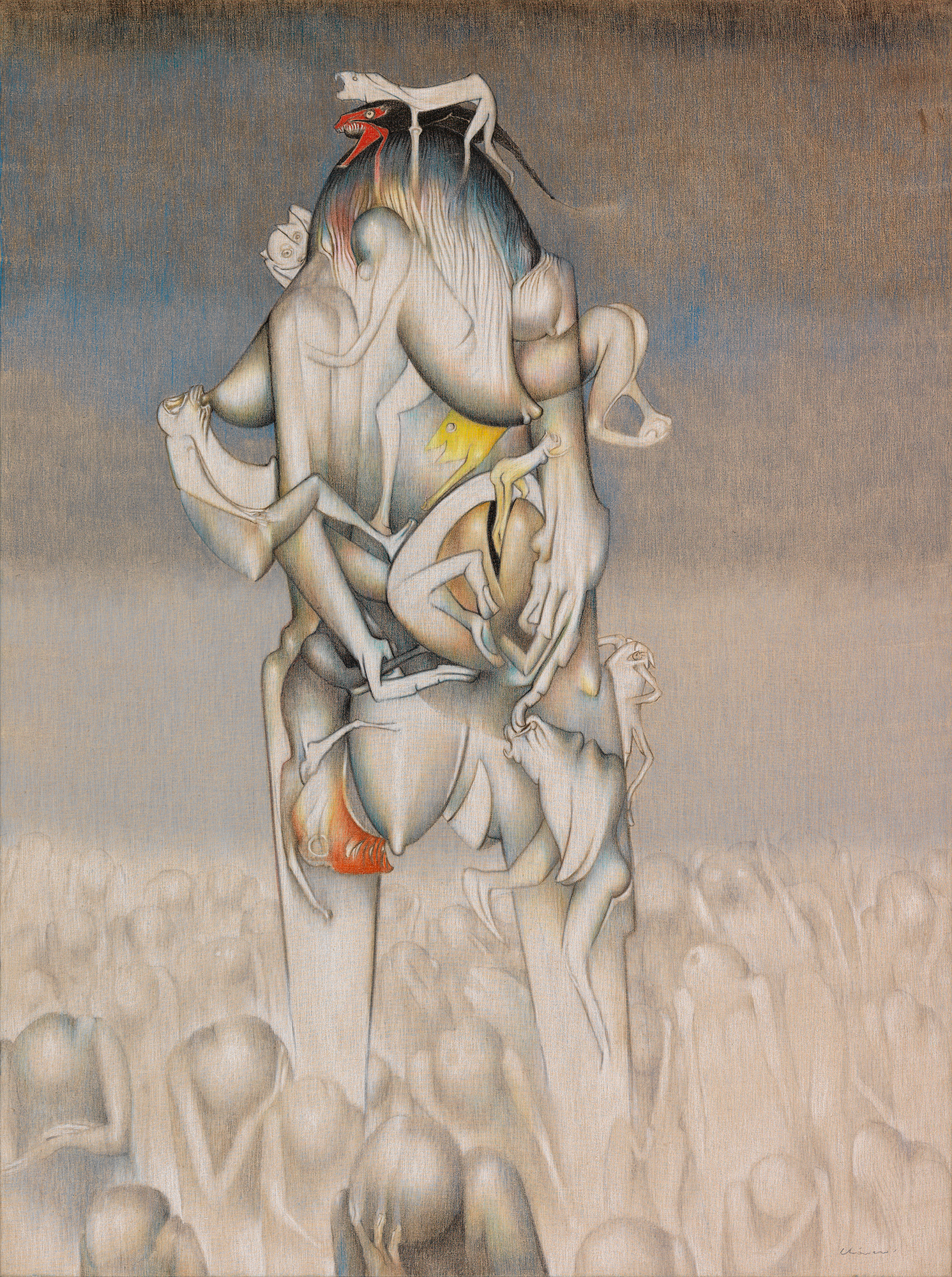
Gerardo Chavez
BIOGRAPHY
Gerardo Chávez (Trujillo, Peru, 1937–2025) was one of the great masters of Peruvian and Latin American painting. His practice explored the image as a territory of the dreamlike, the mythical, and the ancestral. His work developed in a space where the human figure, memory, and imagination intertwine, blurring the boundaries between the real and the fantastical. Rather than depicting the visible world, his paintings construct universes populated by mysterious beings that invite the viewer to enter a magical and deeply personal dimension. His vocation emerged during childhood in Paiján, encouraged by the influence of his older brother, the painter Ángel Chávez. He later moved to Lima, where he enrolled at the Escuela Nacional Superior de Bellas Artes and became part of the celebrated “Golden Generation” of 1959, alongside artists such as Tilsa Tsuchiya, Milner Cajahuaringa, Enrique Galdos Rivas, Alberto Quintanilla, Oswaldo Sagástegui, and Alfredo Gonzales Basurco. That same year, he held his first solo exhibition and represented Peru at the First Paris Biennale. The decisive stage of his career began in 1960, when he moved to Europe. In Florence, his encounter with Renaissance art led him to create his first dreamlike images, while in Rome, the marks and stains on old walls inspired the ghostly figures that would come to define his visual language. There, he developed a friendship with Roberto Matta, who encouraged him to settle in Paris, where he also met Wifredo Lam. Both contributed to his artistic development. From Paris, his work began to gain international recognition, including participation in major exhibitions and biennials, among them the 1966 Venice Biennale. His magical and enigmatic visual language brought him close to Surrealism, while remaining distinctly his own. Over the following decades, he exhibited extensively across Europe, Latin America, and the United States, including exhibitions at institutions such as the Museum of Latin American Art in Long Beach, the Museo de Artes Visuales in Santiago, and the Museo Pedro de Osma in Lima. In 2017, the Museo de la Nación in Lima presented Chávez 80, a major retrospective bringing together more than 200 works and tracing the different stages of his career. In the 1970s, a passionate interest in primitive art led him to visit the caves of Altamira in Spain, the rock paintings of Tassili n'Ajjer in Algeria, and Easter Island. These experiences deepened his engagement with the archaic and the ritual. In the following decades, he developed new series and techniques, including works on jute and with earths collected from different regions of Peru, and created monumental works such as La Procesión de la Papa (1995), measuring twelve meters in length. Beyond his artistic career, Chávez played a fundamental role in promoting culture in Trujillo. He founded the Museo de Arte Moderno de Trujillo and the Museo del Juguete, and contributed to the creation of the Trujillo Art Biennial. His legacy thus encompasses both an extensive artistic practice and an important contribution to the promotion and institutional development of Peruvian art.
Receive more information on available works from this artist.
WORK
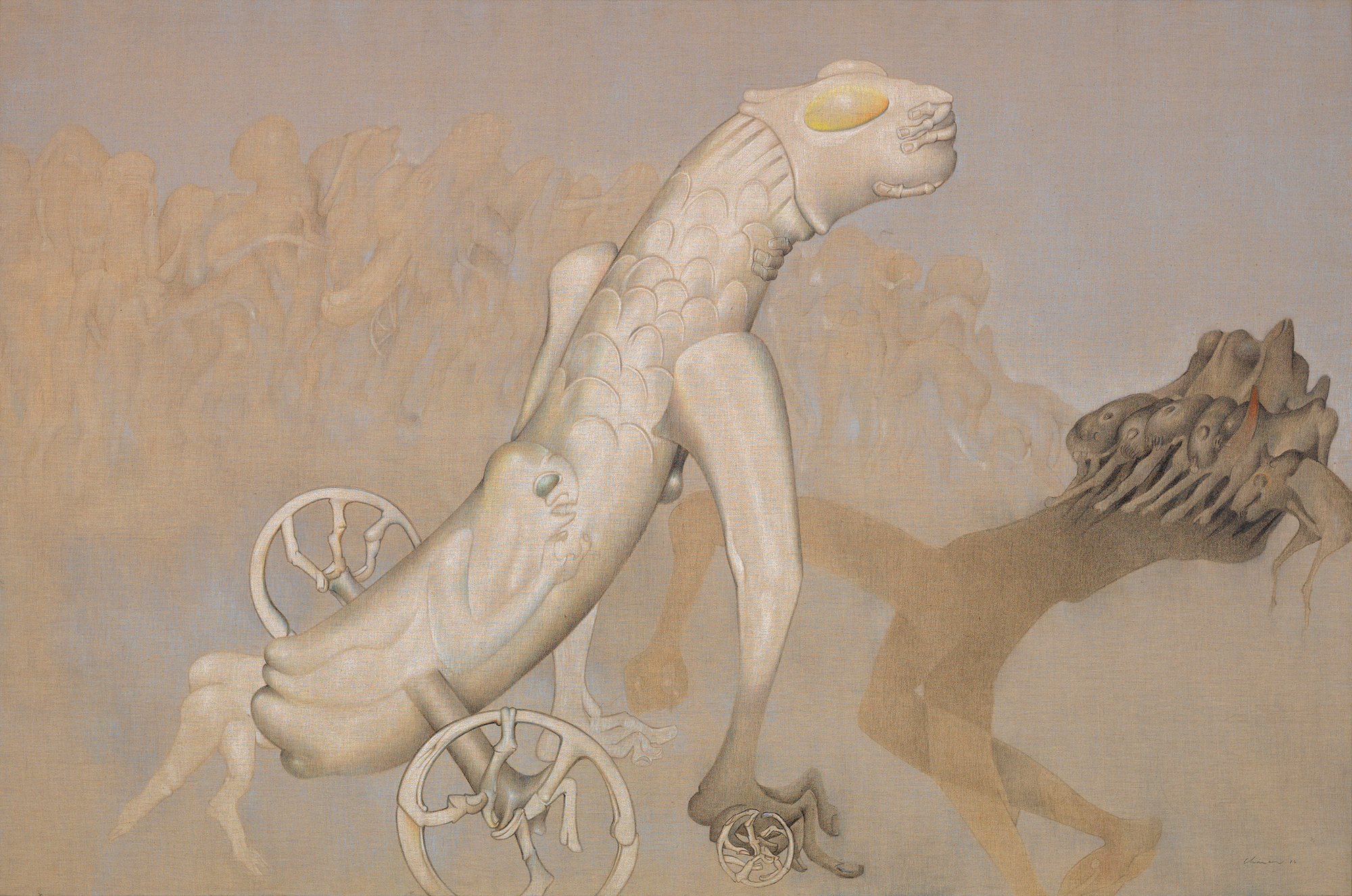
Moitié Homme
1978 Oil pastel on canvas 130 x 195 cm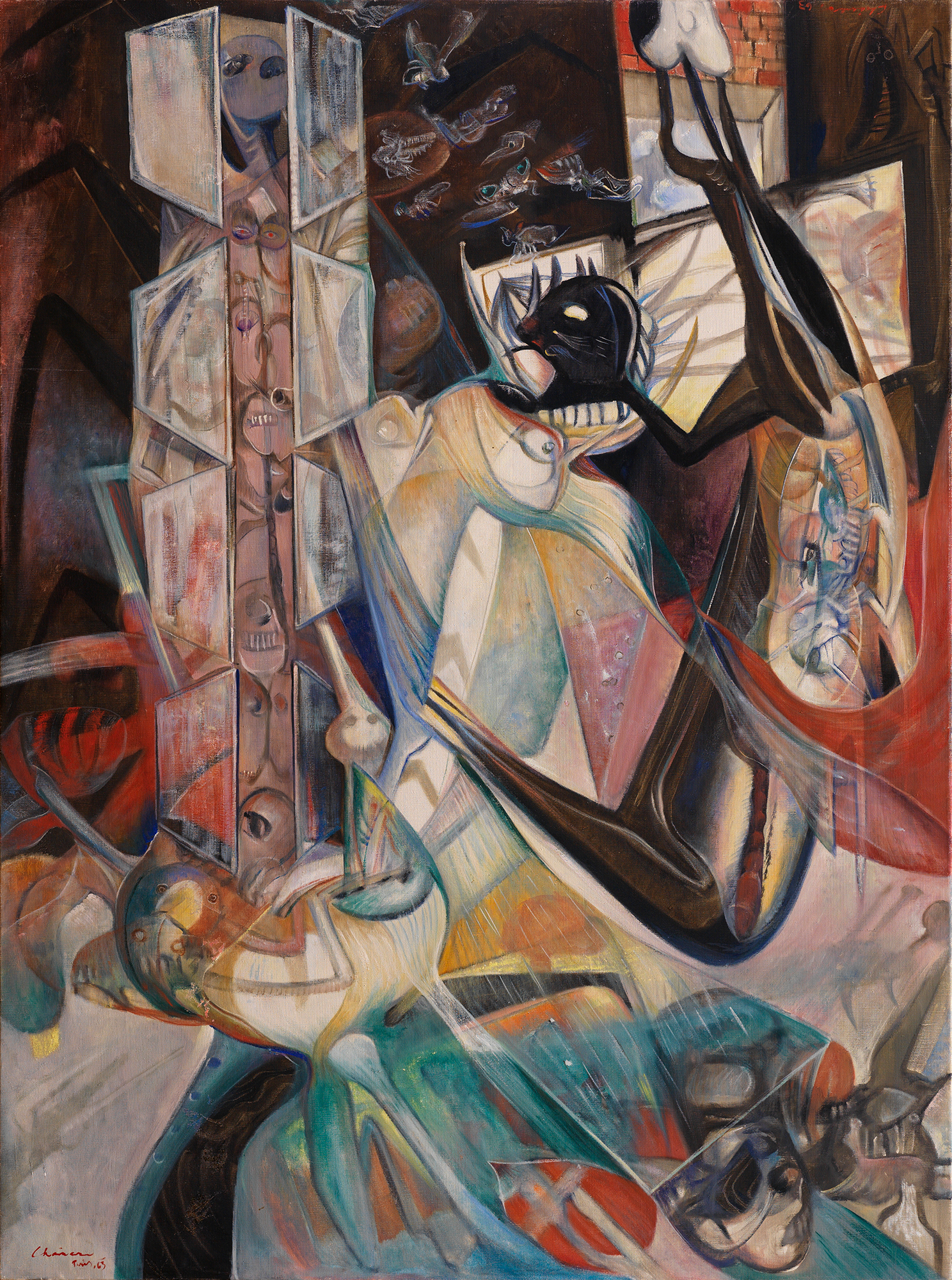
Planéte de L'Interieur
1969 Oil on linen 130 x 97 cm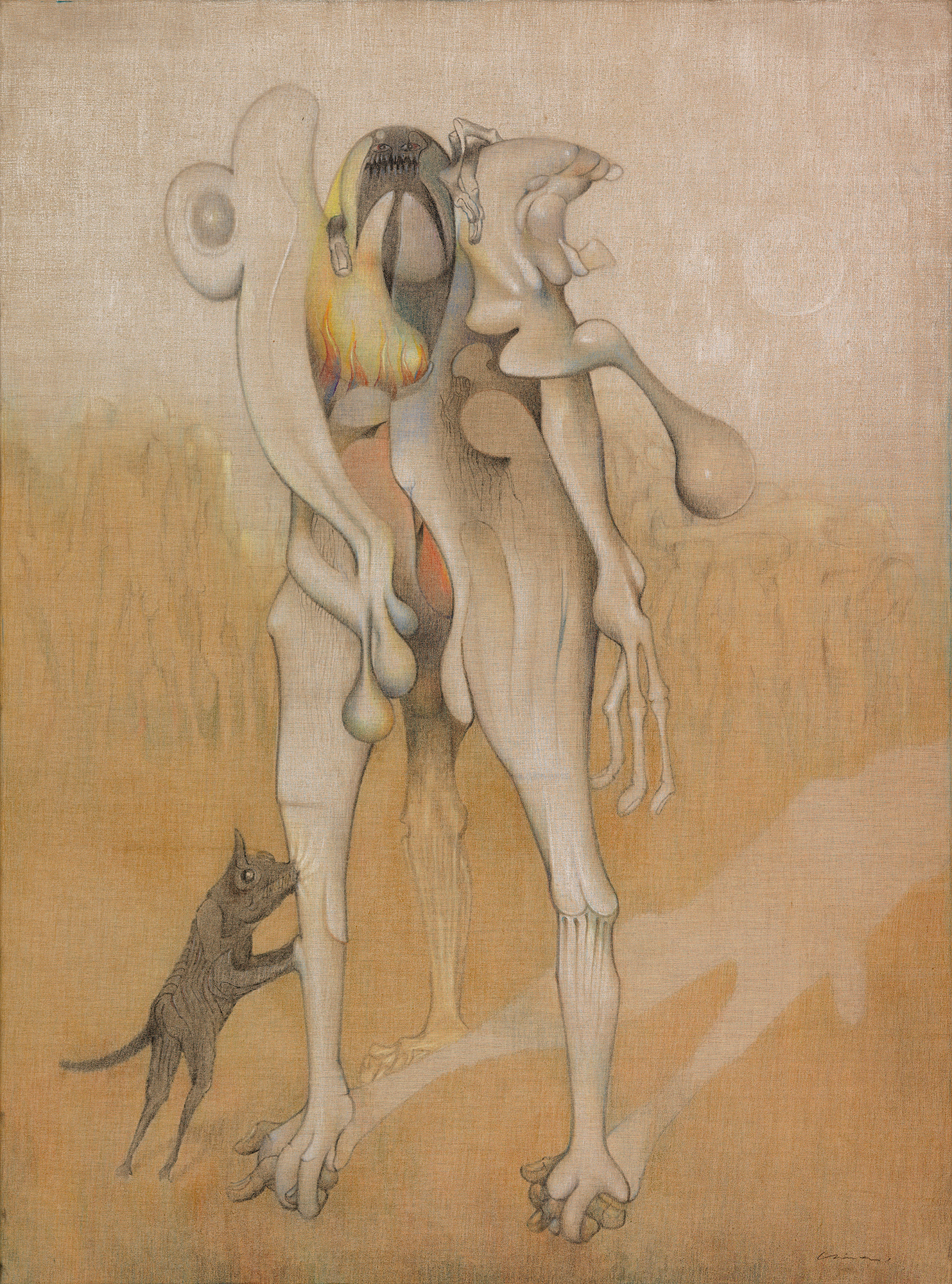
Les Habitans de Silence
1976 Oil pastel on canvas 130 x 97 cm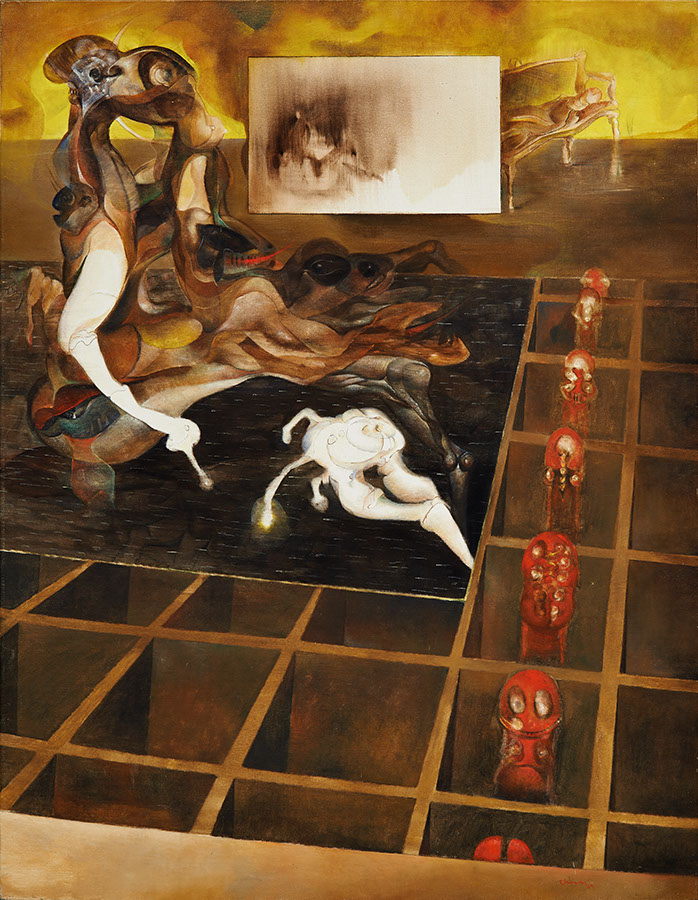
Écran de L'Espior
1969 Oil on linen 146 x 114 cm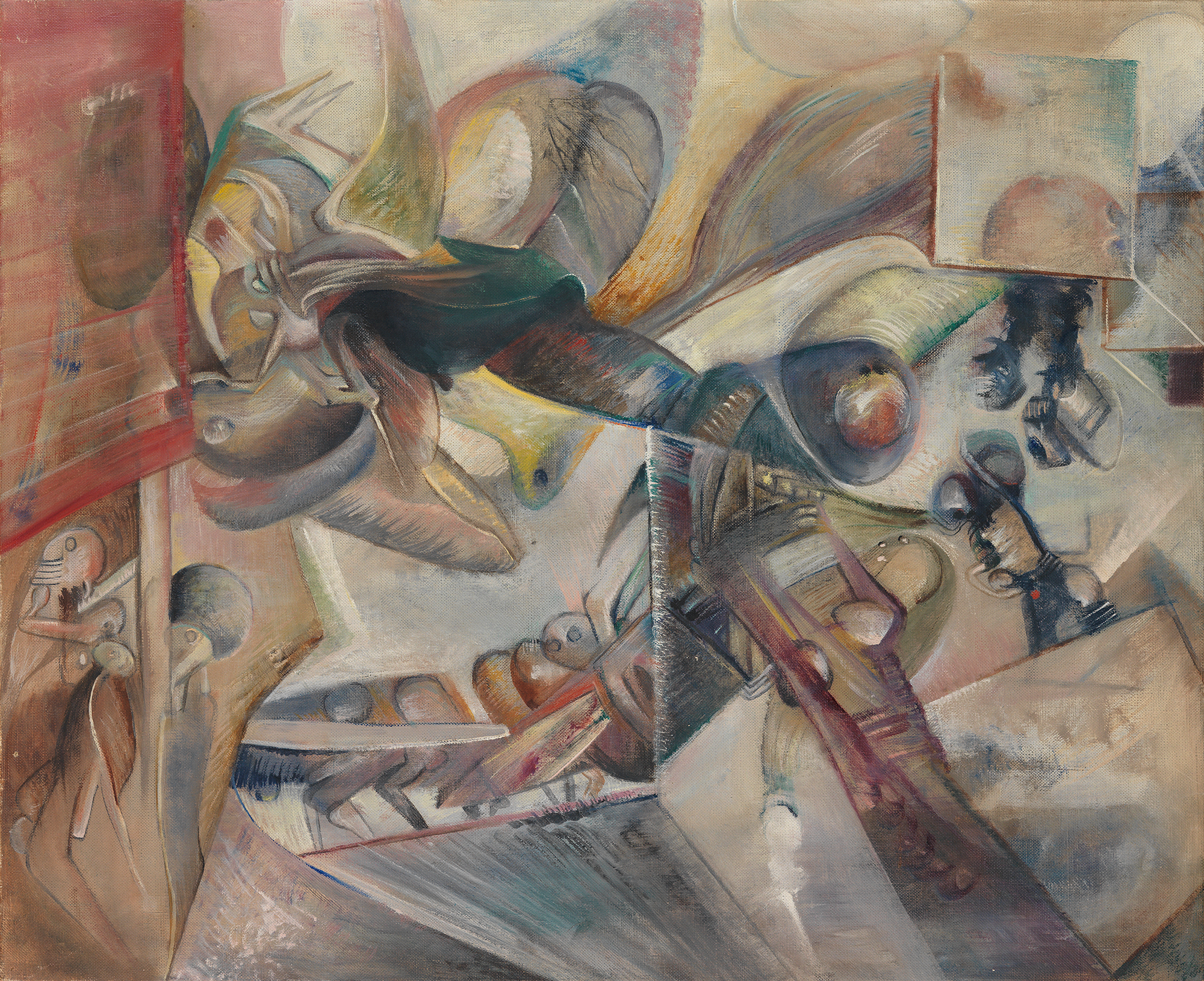
Untitled
1960 Oil on linen 40 x 60 cmLe Magicien Sans Age 1978
Oil pastel on canvas
130 x 97 cm
Moitié Homme 1978
Oil pastel on canvas
130 x 195 cm
Planéte de L'Interieur 1969
Oil on linen
130 x 97 cm
Les Habitans de Silence 1976
Oil pastel on canvas
130 x 97 cm
Écran de L'Espior 1969
Oil on linen
146 x 114 cm
Untitled 1960
Oil on linen
40 x 60 cm